

About
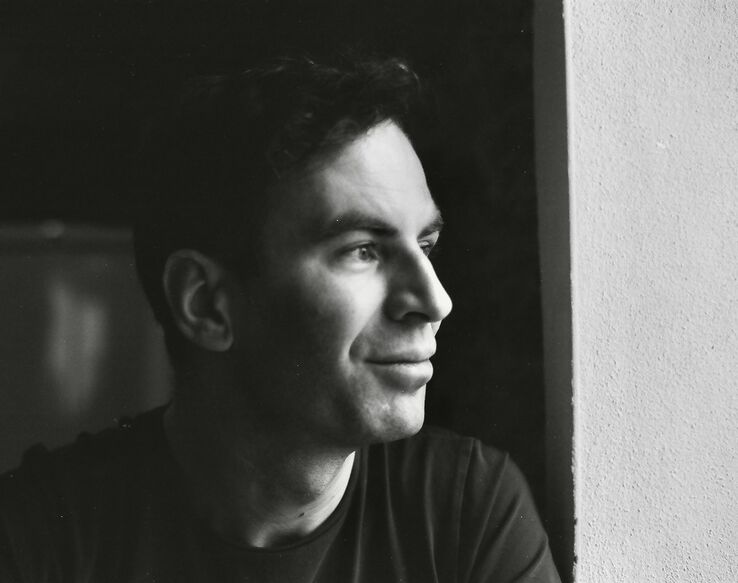
Jan Kubisa (born in 1983, in Krynica-Zdrój) lives and works in Warsaw, Poland. He holds a Master's degree in Archeology from the University of Warsaw with a focus on the anthropology of world religions, studied through their social and symbolic roles.
In his figuration and fieldwork, Jan Kubisa uses color and memory as tools to explore the relational structures that shape human connection and presence. He draws on archival imagery and plein-air observation to compose scenes where people and landscapes speak with equal weight. Nature often appears in a primary role, when not in close dialogue with human figures. His paintings have distinct compositional restraint and visceral color, drawing the viewer into spaces where human and natural elements hold equal presence.
This sensitivity to spatial arrangement and emotional proximity emerges from Kubisa’s early immersion in contrasts. His childhood years among forests and mountains unfolded between two extremes. There were winters that erased the familiar landscape into white silence, and summers where the same spaces would be overtaken by intense green. This rhythm of absence and excess continues to shape how he sees the place of nature and how he paints in relation to it. Its power is undeniable and irresistible.
While some of Kubisa’s paintings begin with archival photographs, his interest lies in how the source image offers a compositional and sometimes accidental frame, which he approaches as an invitation. What draws him in might be a gesture, the spatial tension of an individual in a group, or a relational arrangement that resists a clear narrative. He uses color and scale to move the register away from documentation, and toward an encounter. The result depicts a reconfiguration of what still resonates because of its timelessness and recognizability.
Photographs are structurally suggestive, and Kubisa tests what can be reweighted. The result is an active recontextualization of moments which might otherwise have never been remembered and felt again. In this process, the viewer is reminded of what hangs at the edge of cultural memory, about to vanish as attention is repeatedly placed elsewhere. One feels the pace of forgetfulness through the half-known, impermanent arrangements of those [the figures] shown in these images, who remain emotionally legible even as the context that once held them has dissolved.
Contact
