

Somethings about her as an artist
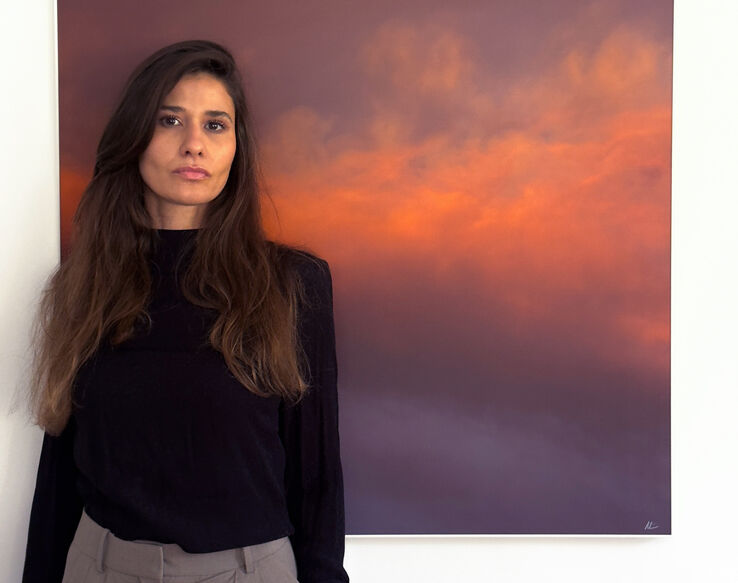
Ulrike Pichl places each photograph within a carefully considered context through its method of production, framing, and title. Every image is given a title, and each is accompanied by a text — a poem.
The poem is an integral part of the work, written specifically for each individual photograph. Longing, becoming, hope, love, fleeting moments of beauty, fear, and the processes of finding and losing oneself are the central themes explored in her texts.
Text and image come together as a poetic unity.
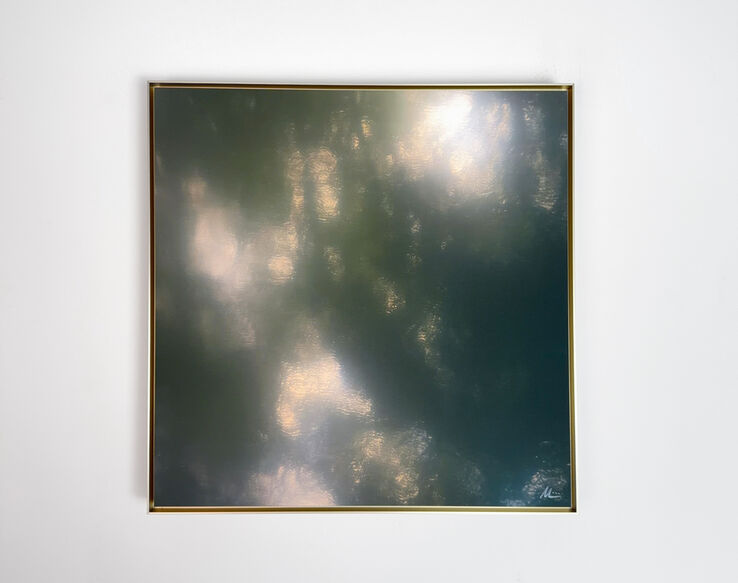
Ulrike Pichl places each photograph within a carefully considered context through its method of production, framing, and title. Every image is given a title, and each is accompanied by a text — a poem.
The poem is an integral part of the work, written specifically for each individual photograph. Longing, becoming, hope, love, fleeting moments of beauty, fear, and the processes of finding and losing oneself are the central themes explored in her texts.
Sky is everywhere
Ulrike Pichl’s approach is simple: she began by photographing what was immediately around her. A chronic condition often makes it difficult for her to leave the house, travel long distances, or go on extended journeys. As a result, most of her images are created within her immediate surroundings - many in her garden or viewed from her window, others in the forest just a few meters from her home. Adjacent to her house is a bridge from which the sky stretches across the entire town.
She has developed the habit of constantly observing light - watching the sky, or the grass by the garden pond as the wind moves through it. These photographs exist because this environment is always present, revealing itself anew each day. She believes she could not show anything more beautiful than what is already there.
Her images are often understood intuitively for what they are: fleeting, beautiful - yet also dark - moments within and beyond ourselves. They invite openness to life, even in states of uncertainty, disorientation, or formlessness.
Pichl frequently experiments with liquids and grease on the lens, allowing her to capture the soft, flickering, moving, and accidental - merging shapes and colors and blending them with light.
In her photographs, Ulrike Pichl is not interested in dissecting what a fern looks like. She seeks to convey what it feels like to see the fern - or what it feels like to dream it.
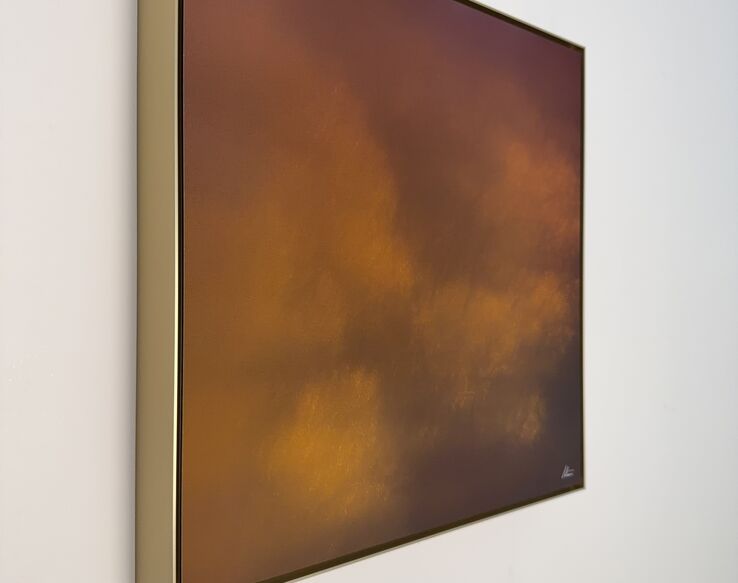
She is drawn to the term sfumato, originating in oil painting, which describes a technique in which forms soften and blend into one another. In her photographic practice, Pichl relates to her images in a similar way - giving them, through her texts, something beyond her gaze: a fragment of her inner world. The boundaries of the captured moment blur with her associations - just as the grease and liquids she often applies to the lens dissolve the borders between light, color, and subject. That's why she calls her Photographs "Sfumatographies"
