

About / Artist Statement
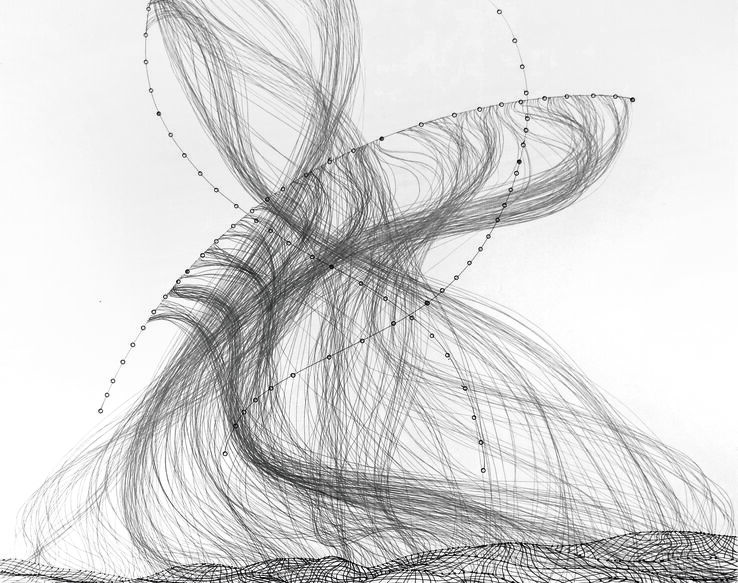
The drawings and photorealistic representations deal with the investigation of the mind. But it is also about questioning what is perceived: the viewer is misled in that the drawings often appear like printed matter. But only at first glance.
There are several larger collections with different focuses: "Change", "PI", or "Form", or "memory". One of the main questions is what processes and effects underlie the visible surface of things, that which cannot actually be made visible.
Change
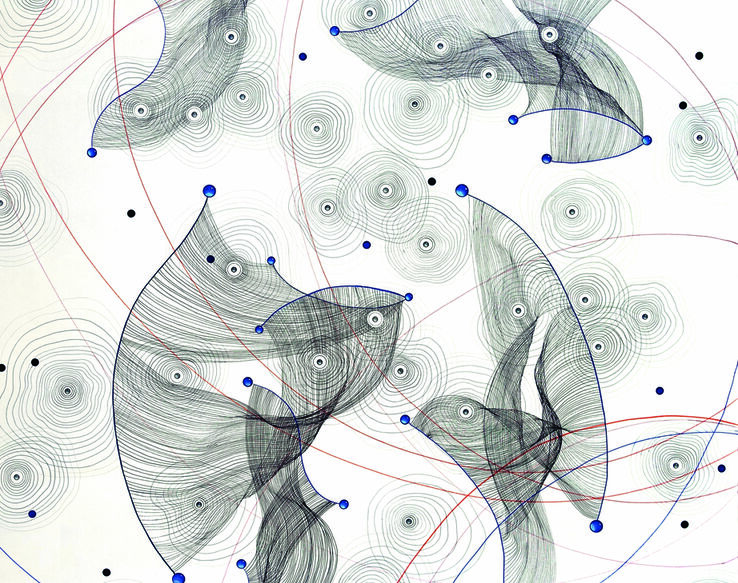
One of the main questions in this collection is what processes underlie the visible surface of things.
When depicting these dynamic processes, unpredictable structures emerge that develop their own laws. The individual elements form higher-level structures that go beyond themselves.
Each formation only shows a fragile moment that no longer exists in the next moment.
Free, intuitive forms are combined with certain defined processes. What happens in the end cannot be planned; surprise is always there, just like in real life.
Project PI
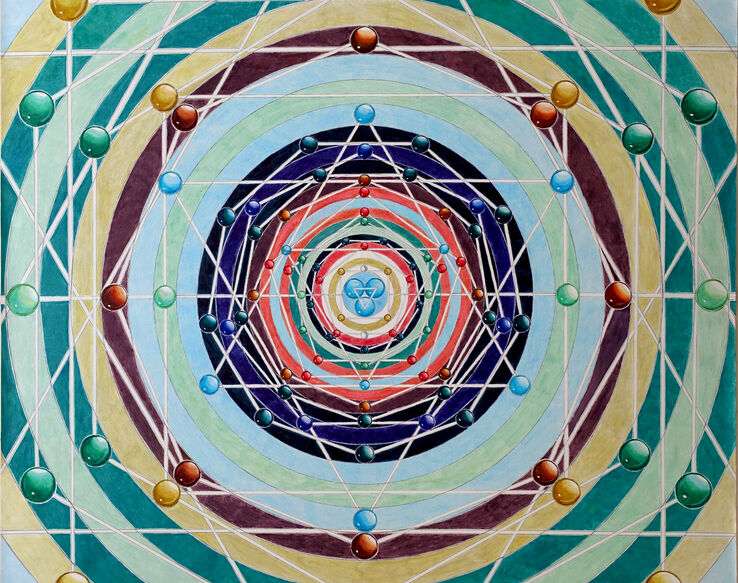
This collection of large-format drawings was created over three years. π fascinated me because of its peculiarity: She has her very own character.
As an irrational number, it cannot be predicted in the sequence of digits. And it (apparently?) does not follow any pattern. How does human perception, with its inherent urge to recognize patterns even in disorder, react to such a phenomenon?
The number sequence and the circle itself are examined as well as the concern with the representability of the infinite.
As a synesthete, I have a special approach to numbers. The colors I use for numbers follow my perception system and are never chosen randomly.
Form / Memory
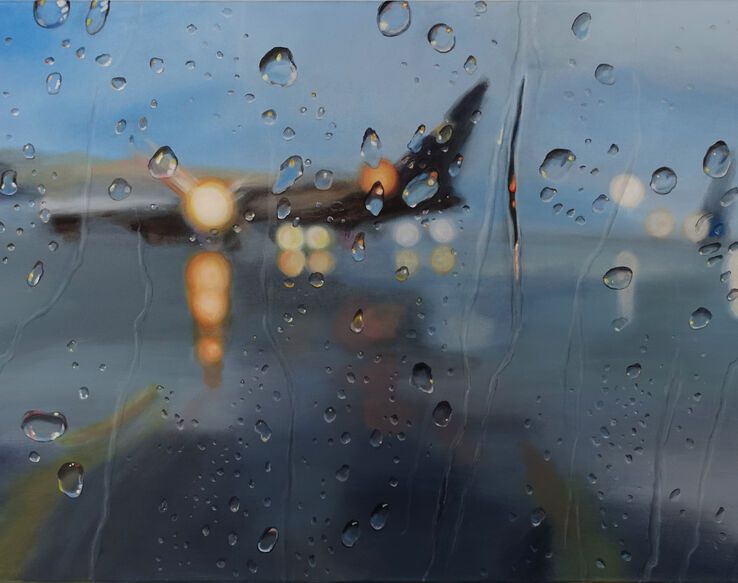
The invironment's photorealistic represenations never deal with the things themselves but about how these things are perceived. The images seem to be filtered and alienated through the media of photos or films. The reference to blurred snapshots, yellowed family photos, or film stills conveys an apparent objectivity. But all the scenes are perceived through a personal lense.
Memory images are located in a second-degree reality, of aura, change and death. The topic is the transformation process of memory archetypes that go beyond personal stories. They are often unspectacular scenes, but they have an even more lasting effect on one's own world view.
Beyond the starting point of matter, the invisible comes into focus - and with it the question of what it is that makes the world appear as it does.
