The Cleveland Museum of Art

Printmaking in the Renaissance – The Renaissance of Printmaking

Around 1500, woodcut and copperplate engraving developed into distinct art forms: Drawing on works from its own collection, the Cleveland Museum of Art presents the exhibition The Renaissance Engraver at Work. The exhibition runs through November 1 and also features extremely rare prints.

July 24, 2026
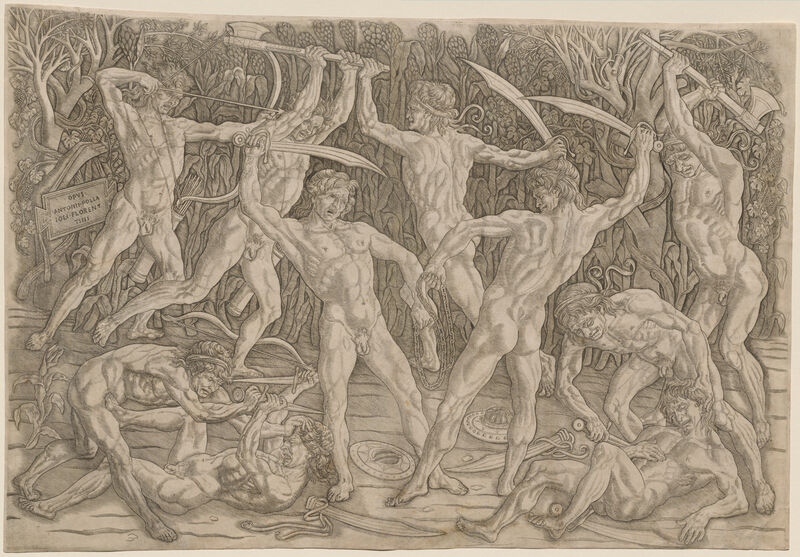
Battle of the Nudes, 1470s–80s, Antonio del Pollaiuolo (Italian, 1431/32–1498).
Public domain
Battle of the Nudes, 1470s–80s, Antonio del Pollaiuolo (Italian, 1431/32–1498). Engraving; platemark: 42 x 60.4 cm (16 9/16 x 23 3/4 in.); sheet: 42.4 x 60.9 cm (16 11/16 x 24 in.). The Cleveland Museum of Art, Purchase from the J. H. Wade Fund, 1967.127

Johannes Gutenberg (c. 1400–before 1468), often credited as the inventor of modern book printing, was actually a goldsmith. This reflects an original function of printmaking: book illustration. Toward the end of the 15th century, artists—led by Albrecht Dürer—recognized the pictorial potential of printmaking techniques, which increasingly developed into independent art forms and existed even without accompanying text. In addition to masterful craftsmanship that fascinated viewers, another factor in the triumph of printmaking was the ability to reproduce existing works of art. Compositional ideas and styles thus spread across Europe faster than ever before, originating from printmaking centers such as Antwerp, the Rhine region, Nuremberg, Venice, Florence, Rome, and Paris. The Cleveland Museum of Art explores the early history of woodcut and copperplate engraving in The Renaissance Engraver at Work. The exhibition runs through November 1.

The Cleveland Museum of Art owns some of the world’s rarest and most significant early prints. Among them is the only known first edition of Antonio del Pollaiuolo’s Battle of the Nudes (pictured above), as well as unique prints by the Master of the Nuremberg Passion and the Master of the E-Series Tarocchi. Del Pollaiuolo’s work, a battle scene »all’antica«, is one of the earliest examples that, as became common during the Renaissance, indicates a precise observation of human anatomy. Other exhibits, all also from the museum’s collection, include works by Albrecht Dürer, Hendrick Goltzius, Marcantonio Raimondi, and Martin Schongauer. The engravings on display, created between 1470 and 1650, demonstrate how significant artists produced impressive works through innovative techniques and, confined to the line, created textures and volume within a two-dimensional plane.Art.Salon

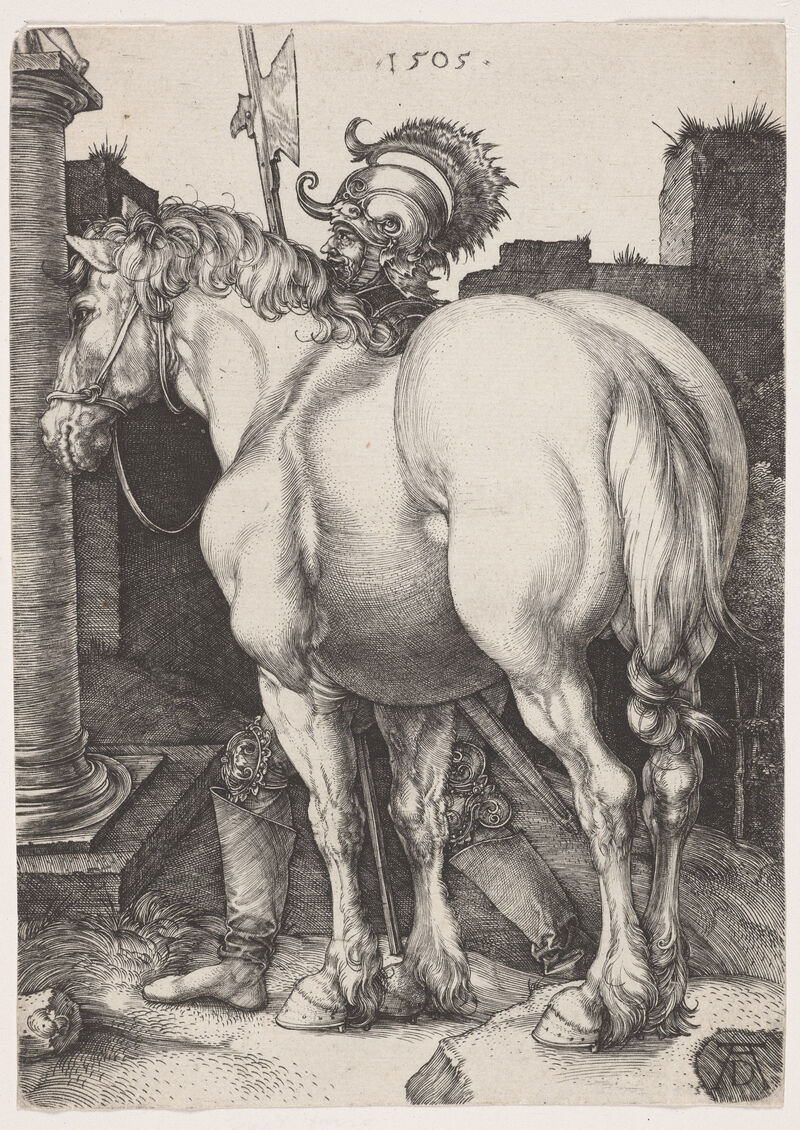
The Large Horse, 1505, Albrecht Dürer (German, 1471–1528).
Public domain
The Large Horse, 1505, Albrecht Dürer (German, 1471–1528). Engraving; sheet: 16.6 x 11.9 cm (6 9/16 x 4 11/16 in.). The Cleveland Museum of Art, Bequest of Leonard C. Hanna Jr., 1958.113

Dive deeper into the art world

Dublin, National Gallery of Ireland

In a special exhibition, the National Gallery of Ireland presents drawings from its own collection: In Rembrandt to Matisse – A Celebration of European Works on Paper, visitors can trace the evolution of styles and favored motifs over the centuries. The exhibition runs through December 6 in Dublin.

July 23, 2026
Rijksmuseum Amsterdam Presents Ed van der Elsken

He was one of the most famous Dutch photographers of the 20th century: Ed van der Elsken captured cultural upheavals as a street and travel photographer. The exhibition Ed van der Elsken. Up Close is on view at the Rijksmuseum Amsterdam through September 13.

July 21, 2026