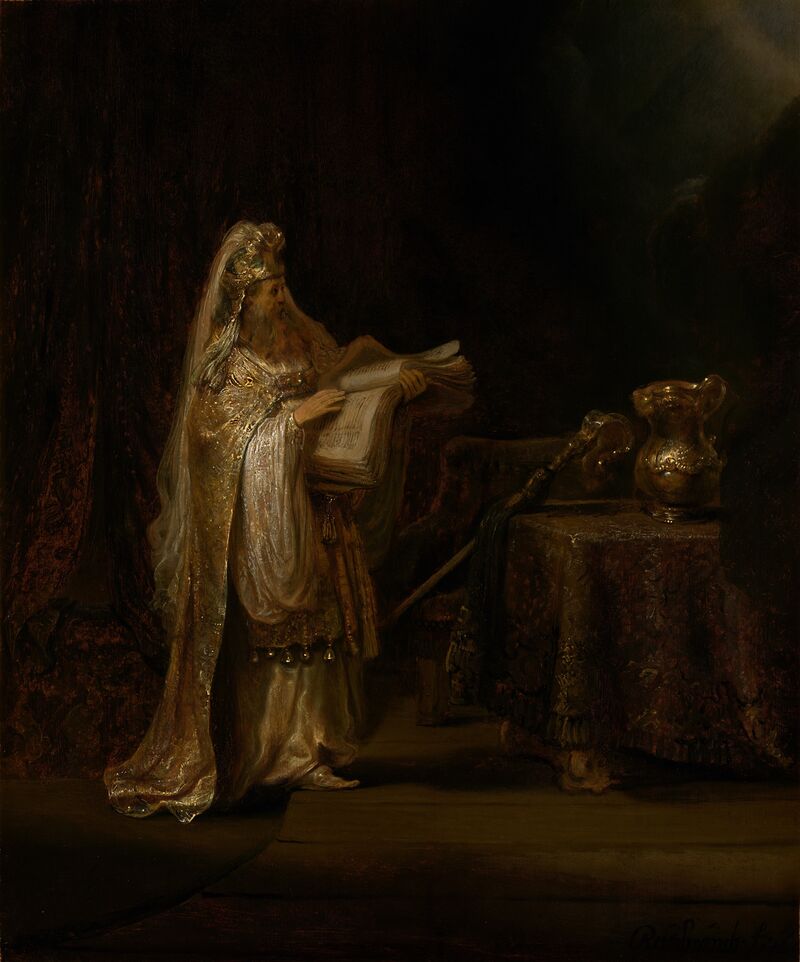
Rembrandt van Rijn, Vision of Zacharias in the Temple, 1633. On loan from a private collection. Photo: Rene Gerritsen


After two years of intensive research, researchers at the Rijksmuseum in Amsterdam are certain: the painting Vision of Zacharias in the Temple (1633) is indeed by Rembrandt. From March 4, the privately owned painting will be on public display at the museum for the first time in many decades.
First removed from the oeuvre, now added back: since 1960, the painting Vision of Zacharias in the Temple (1633) was no longer considered to be an authentic work by Rembrandt van Rijn (1606-1669). It had previously been exhibited as a work by the painter at the Stedelijk Museum Amsterdam in 1898, among other places. In 1961, it was purchased by a private collector and has not been shown publicly since. Due to a previously undiscovered signature, the owners turned to the Rijksmuseum in Amsterdam for a new examination using the latest techniques. After two years, the researchers have now determined that the painting is indeed by Rembrandt. A dendrochronological analysis of the painted wooden panel also confirms the year 1633 indicated in the signature. The owners are now making the painting available to the museum on permanent loan: Vision of Zacharias in the Temple will be on public display again from March 4.
The painting depicts a scene from the biblical story of the high priest Zacharias, to whom an angel announces that he and his wife will have a son despite their advanced age: John the Baptist. The presence of the angel is indicated by the light in the upper right corner of the painting. This represented a break with traditional pictorial compositions in which the angel was shown as a figure: the painter focuses on the dramatic change in a situation, also evident in Zacharias' surprised expression, rather than on the meaning of the annunciation. This concept is very common in Rembrandt's early works. The painting was created shortly after his arrival in Amsterdam, a prosperous trading city where the painter enjoyed a rapid rise to fame in the highly competitive art market of the 1630s. It is one of the few history paintings from his early period. During his lifetime, Rembrandt was known like few others for his ability to cover the entire spectrum of painting, from history and portraiture to still life, at the highest level.
As part of the InterNationalgalerie series, the Alte Nationalgalerie invites other institutions to exhibit in its own spaces. Kicking off the series on June 18 is the National Museum in Warsaw with the exhibition Inventing Myths.
Through June 27, Elvira Flamm is showcasing three works from her series Ikonen ohne Namen (Icons without Names) in the Made in Berlin Art Award 2026 exhibition. She was selected as one of 20 artists for the show at the BBA Gallery.