ALBERTINA, Wien. Dauerleihgabe der Österreichischen Ludwig-Stiftung für Kunst und Wissenschaft
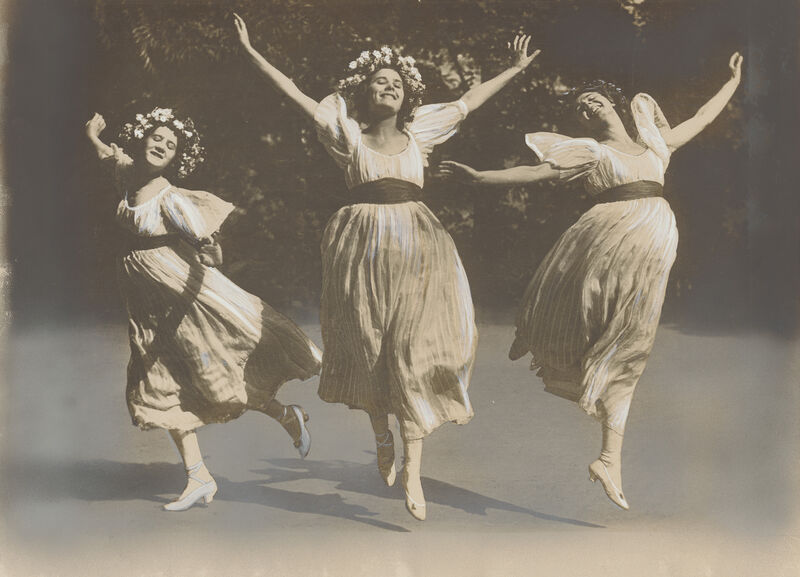
Rudolf Jobst, Grete, Elsa und Berta Wiesenthal im Lanner-Schubert-Walzer, 1908


Vienna dances: ALBERTINA MODERN is presenting its first major exhibition on the subject of dance photography. The exhibition covers the period from the 1860s to the 1930s and is based on the museum's own collection. Dance Images opens on March 3 in Vienna.
A historical overview of dance photography takes a look at the development of dance, but also at the development of photography: Photographers always used the latest technical possibilities and the most popular and innovative stylistic trends to translate dance into still images as vividly as possible in terms of expression, rhythm, and movement. Based on its comprehensive collection, ALBERTINA MODERN is dedicating itself to the theme of dance photography for the first time: The spectrum ranges from ballet portraits of the 1860s to snapshots of free dance around 1900 to avant-garde photographs of the 1920s and 1930s, when rhythmic-expressive dance experienced its heyday, especially in German-speaking countries. The focus is on Vienna, where after 1900 an independent scene reinterpreted dance as an art form. The exhibition Dance Images features works by Fred Boissonnas, Rudolf Jobst, Carl Mahlknecht, Charlotte Rudolph, Anton Josef Trčka, and others. The show runs from March 3 to June 7 in Vienna.
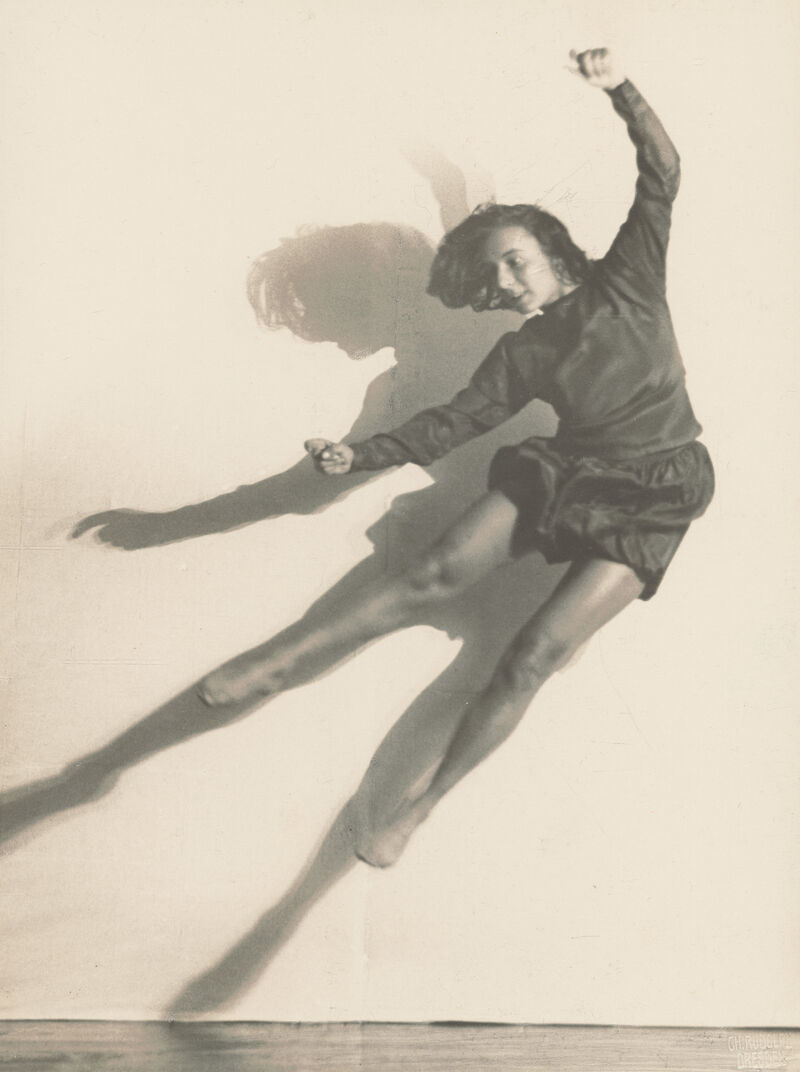
Charlotte Rudolph (1896–1983) is considered one of the most influential photographers in her field. From 1924 onwards, she ran a photo studio in Dresden that focused on portrait and dance photography. Rudolph succeeded in capturing dancers not in poses, but in motion, as they performed their dances without being influenced by the process of being photographed. This resulted in numerous spectacular images of dancers in mid-air, for which Rudolph became internationally renowned. In 1929, she published an article on dance photography in the magazine Schrifttanz. In it, Rudolph described how such an image should reflect the characteristic movements of a dancer and that these could be found above all in the so-called transitional moments, which she distinguished from the main moments—the grand poses that dancers had previously reenacted for dance photographs. Furthermore, a dance photograph must reflect the dance and movement in their effect in space and also the material of the costume. »For me personally, it is extremely interesting to gain insight into the development of dance, not only among individual dancers but also among entire schools, by comparing the material I have accumulated over the years. An overview of this magnitude would hardly have been possible with positional photographs«, Rudolph concluded.
Through June 27, Elvira Flamm is showcasing three works from her series Ikonen ohne Namen (Icons without Names) in the Made in Berlin Art Award 2026 exhibition. She was selected as one of 20 artists for the show at the BBA Gallery.
Paintings and sculptures on social conditions: Stefan Stichler creates works open to interpretation based on everyday observations and his own experiences. In the exhibition Bullet The Blue, he presents recent works shaped by current events. The vernissage begins on June 21 at 3:30 p.m. at Kunstraum EN in Ennepetal.