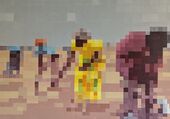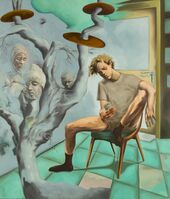


Around 110,000 people from 280 villages had to find a new home: when construction of the Mangla Dam, one of the largest dams in the world, began in Pakistan in the 1960s, many people's familiar lives came to an end and they had to build new ones for themselves. The damming of the river rendered large areas of land uninhabitable. A large proportion of the resettled population settled in Birmingham. With the exhibition Saba Khan: Riverless Water, the artist Khan, who lives in Lahore and London, explores environmental change, displacement, and migration through paintings, interviews, and an installation. »I believe that art has a restorative and healing impact. I make work to have a beautiful and positive impact on the lives and hearts of the viewer,« says the artist about her work. The current exhibition runs from January 10 to April 6 at the Midlands Arts Centre in Birmingham.
Saba Khan's interdisciplinary work is based on intensive expeditions, research, and fieldwork, combining art and performance with ecology and colonial history. A particular focus is her critical examination of how environmental destruction influences identity and migration. Khan has taught at the National College of Arts in Lahore and Chelsea College of Arts in London, among others. She has participated in exhibitions worldwide, most recently at the Sharjah Biennial 15 (2023) and the Gangwon Triennial (2024). In 2014, Khan founded the Murree Museum Artist's Residency, which encourages participating artists to develop alternative ideas about social integration, tolerance, and freedom, while promoting collaboration with the local population.