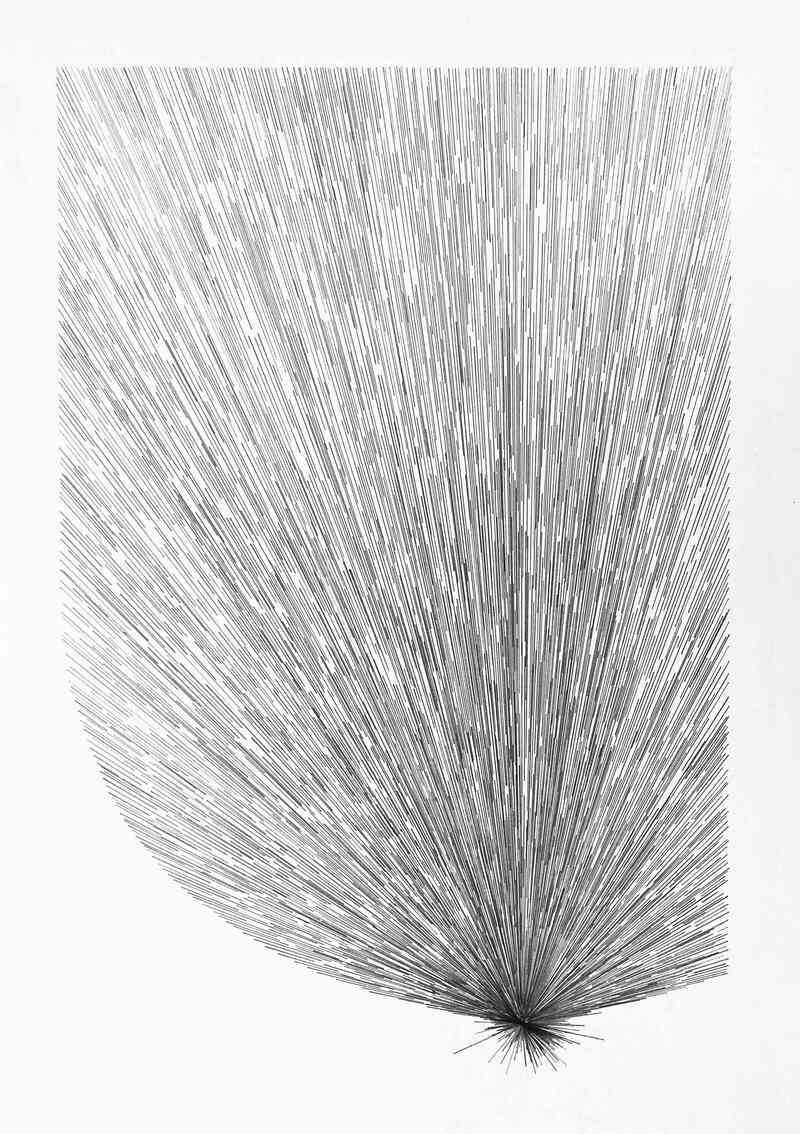
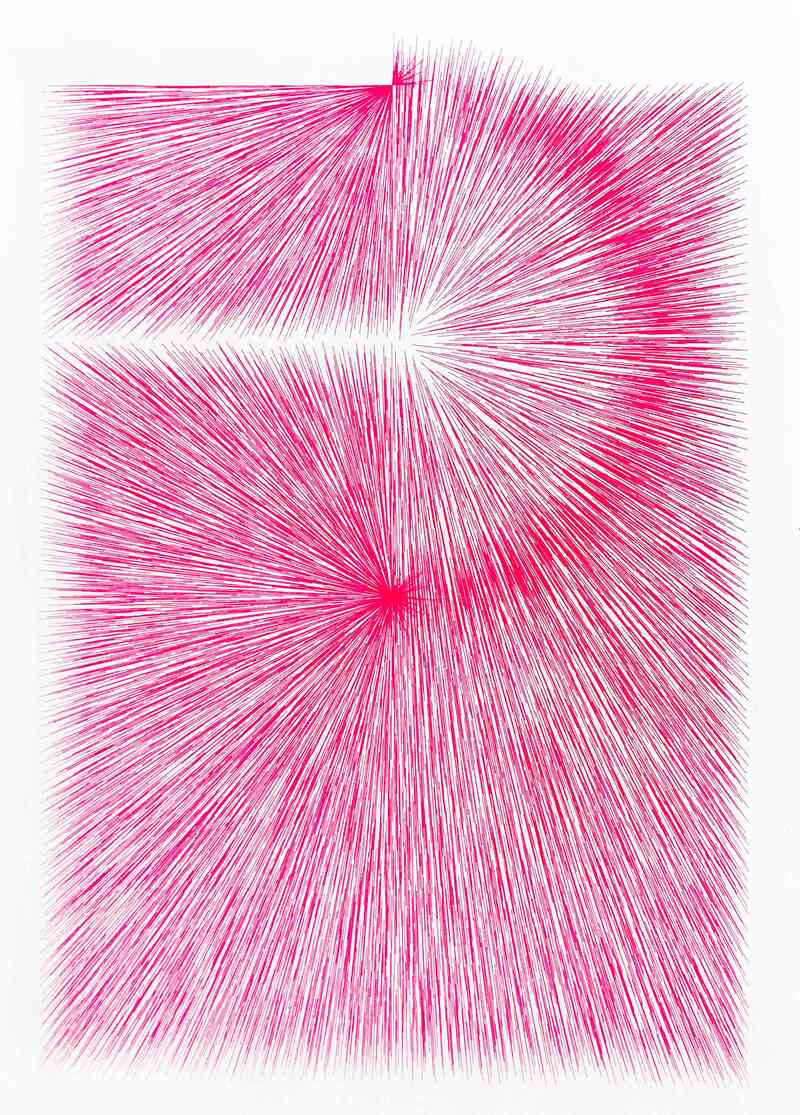
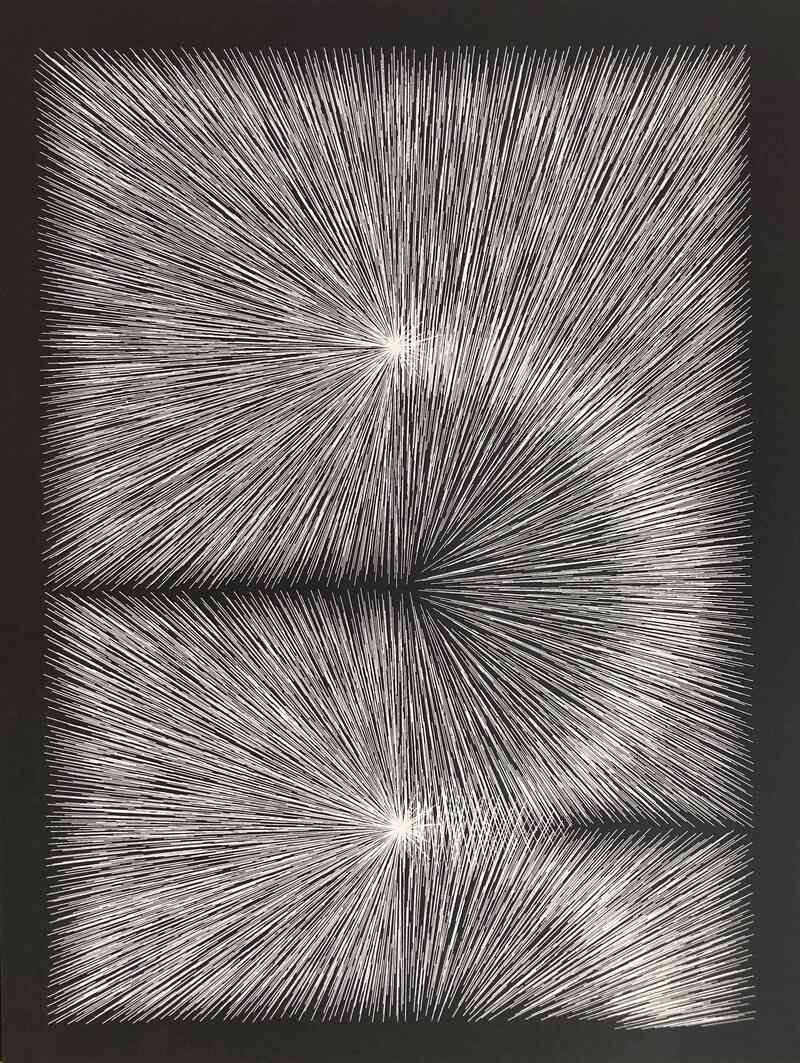
Agata Kycia: Tipping Point 2 (2024), Drawing with pencil on handmade cardboard


In a free dance with hidden rules, a wildly organised swarm of dots and lines forms complex structures between order and freedom, choreographed by Agata Kycia in a suspenseful performance of inner beauty and coherence.
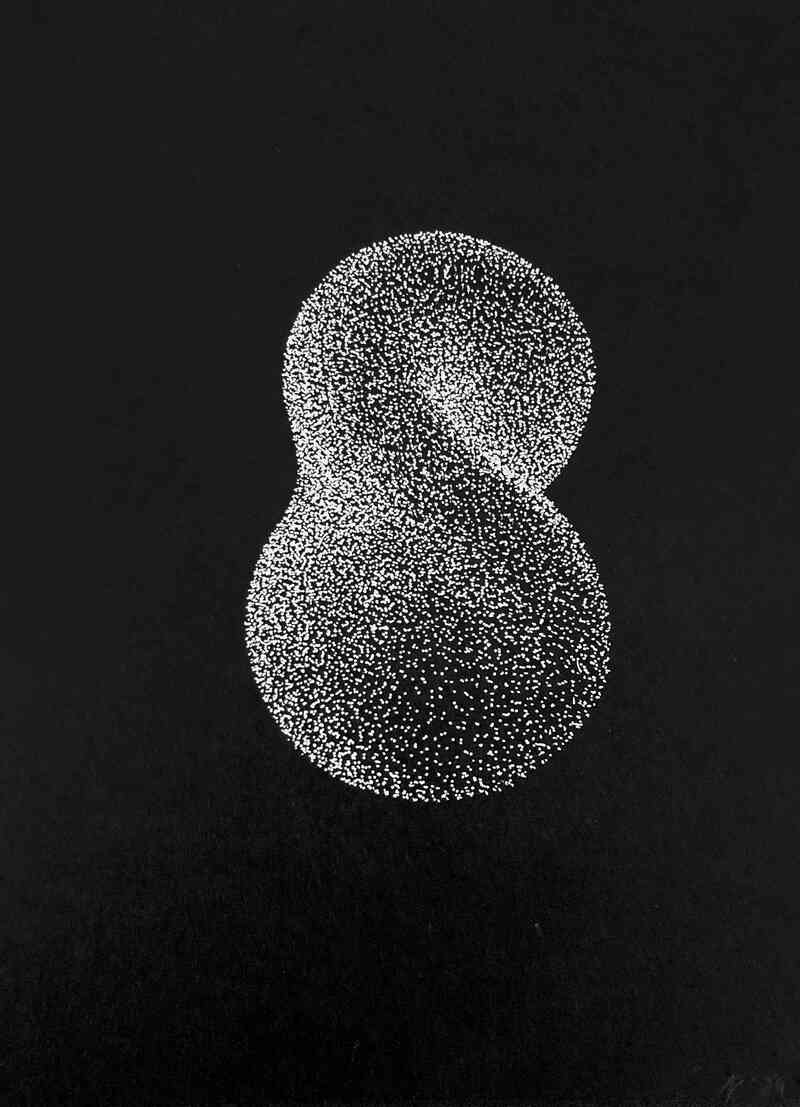
Basic geometric forms such as lines, dots or small ellipses, but also tiny shapeless spots, are the building blocks of Agata Kycia's compositions. They combine in seemingly endless numbers, forming complex structures of the highest harmony. Their arrangement is obviously not random, but seems to follow a certain pattern, and one is tempted to decode the underlying algorithm that defines the system. Where you first think you see perfect symmetry, a second look reveals clear deviations; apparent repetitions of simple patterns turn out to be a sequence of ever-new variations. The result is an exciting interplay between seemingly mechanical precision and vibrant nuance. There are always new aspects to be discovered, both in the details and in the overall picture.
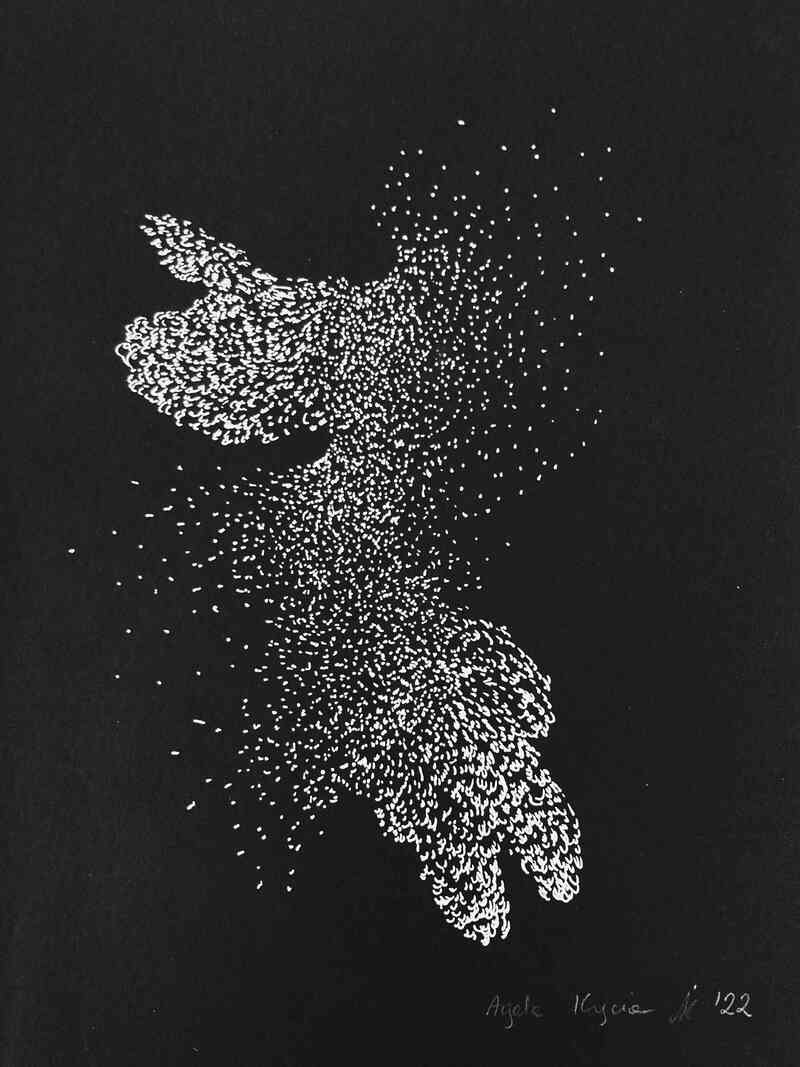
The Berlin-based artist is also an architect and scientist who is interested in the possible intersections between computer-based design, digital production and material science. She completed her PhD at the Faculty of Architecture at the TU Berlin on design strategies and form-finding using 3D printing on fabric. This background also has a significant influence on her artistic work, in which she seeks to achieve a dialogue between the precision of the digital and the imperfection of craftsmanship. For this, she combines printing techniques such as screen and relief printing with free painting and drawing. Compositionally, her images echo not only Kycia's studies in architecture but also her general fascination with geometric forms and spatial perception while in terms of content, despite their strict structure, they depict intangible concepts and emotions that reflect Kycia's experiences as a woman and mother. The results are impressive, multi-layered works that are well worth discovering.
Tip: You can currently see them in Berlin: Agata Kycia's works are on display at Galerie Froschke's Contra:Punkt exhibition until 26 April 2025.
More about the artist: Agata Kycia's artist page
We are all protagonists in the changing times. In multi-layered drawings, collages and sculptures, Ellen Driscoll creates a complex web that shows us how our individual destinies merge with the global challenges of the present.
He was one of the most famous Dutch photographers of the 20th century: Ed van der Elsken captured cultural upheavals as a street and travel photographer. The exhibition Ed van der Elsken. Up Close is on view at the Rijksmuseum Amsterdam through September 13.