Altdorf/Glarus: Two Institutions Present a Joint Exhibition

The Landscape as an Echo of Culture

A special exhibition project in the heart of Switzerland: The Haus für Kunst Uri in Altdorf and the Kunsthaus Glarus are presenting their joint exhibition, The Sigh of the Mountain – On Echoes and Traces in Our Landscapes, which spans both institutions, through August 30. The artworks are by national and international artists.

July 09, 2026
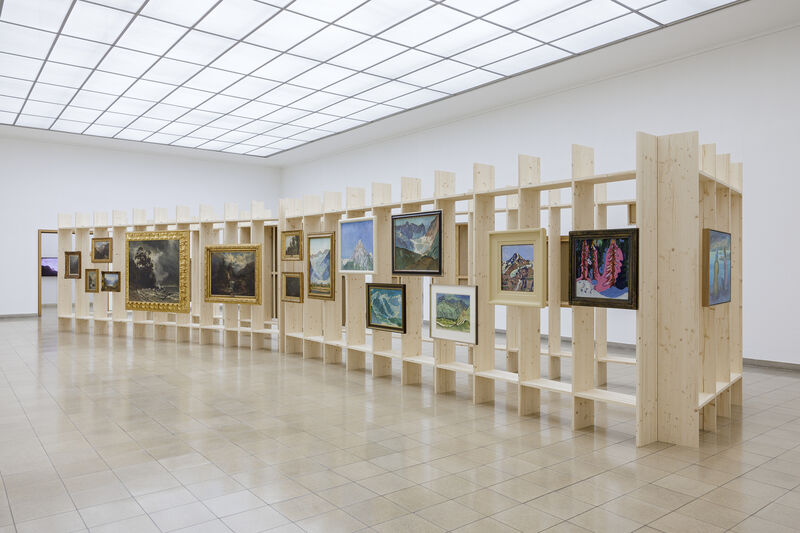
The Sigh of the Mountain, Installationsansicht / installation view Kunsthaus Glarus, 2026. Noemi Pfister, Werke aus der Sammlung des Glarner Kunstvereins und dem Archiv der Dätwyler Stiftung, Ausstellungsdisplay von informale
Photo: Gina Folly
The Sigh of the Mountain, Installationsansicht / installation view Kunsthaus Glarus, 2026. Noemi Pfister, Werke aus der Sammlung des Glarner Kunstvereins und dem Archiv der Dätwyler Stiftung, Ausstellungsdisplay von informale / Noemi Pfister, works from the collection of the Glarner Kunstverein and from the archive of the Dätwyler Foundation, exhibition display by informale.

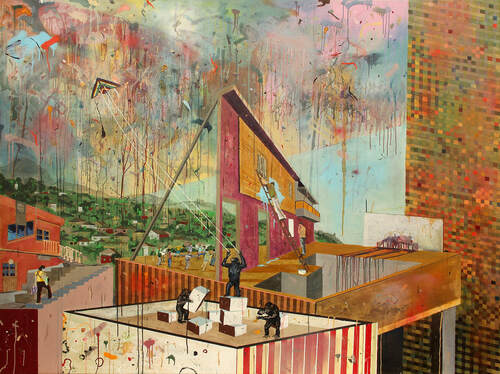
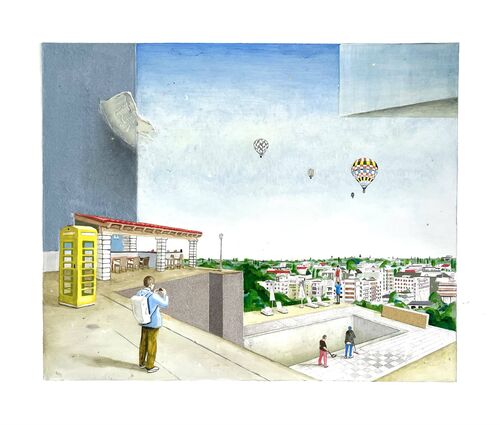
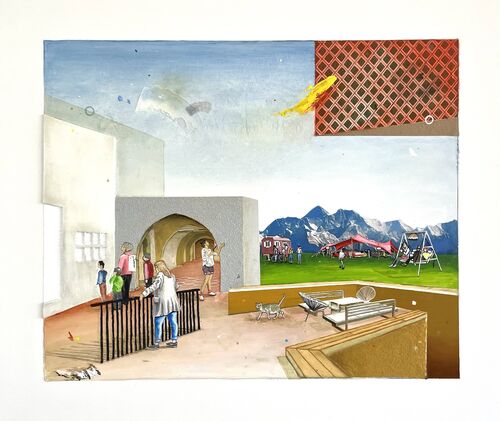
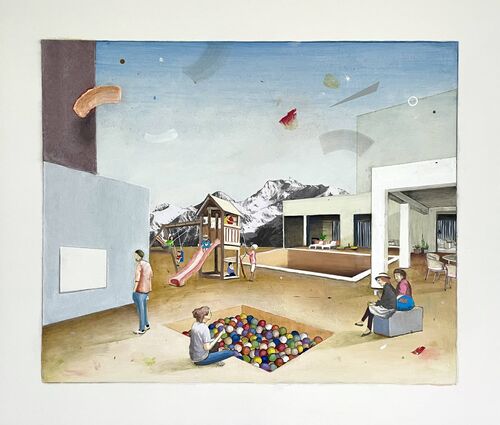
Connected by the Klausen Pass and by the echo: Nestled in the Alpine landscape, the Kunsthaus Glarus and the Haus für Kunst Uri in Altdorf are presenting their first jointly curated exhibition. Conceived around the acoustic phenomenon of the echo—historically described as the sigh of the mountains or the whisper of mountain spirits—the institutions explore contemporary reverberations that interpret and help shape landscapes socially, culturally, and politically. Landscape is not stylized as an idyll but is perceived as a metaphor for human action, which manifests itself, for example, in migration, war, and ecological changes. In The Sigh of the Mountain – On Echoes and Traces in Our Landscapes, works by 18 national and international artists are on view through August 30. The exhibition was curated by Annette Amberg and Gioia Dal Molin, who took over as directors of the two institutions last year.

The show features Noor Abed, Talar Aghbashian, Kateryna Aliinyk, Nathalie Bissig, Yann Stéphane Bisso, Binta Diaw, Andro Eradze, Sky Hopinka, Dominique Koch, Angelika Loderer, Zahra Malkani, Lou Masduraud, Leila Peacock, Noemi Pfister, Stas Shärifulla, Tiffany Sia, Rebecca Solari, and Anouk Tschanz. The artists, all born in the 1980s and 1990s, work in various media such as painting, film, photography, sculpture, sound, and performance. Drawing on fictional and real landscapes—including, for example, Ukraine and the Sindh province in Pakistan—they reveal historical and political traces that will remain visible well into the future. The Kunsthaus Glarus also uses historical archival material and photographs to shed light on its own immediate surroundings: in the mid-19th century, the canton was first marked by massive emigration to the United States, and a few decades later by an »economic miracle« and extreme immigration.Art.Salon

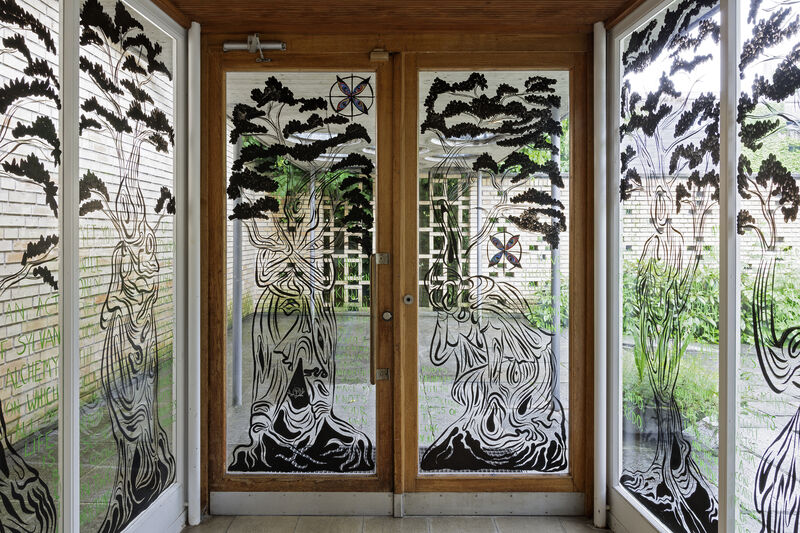
The Sigh of the Mountain, Installationsansicht / installation view Kunsthaus Glarus, 2026. Leila Peacock, Hain, 2026
Photo: Gina Folly
The Sigh of the Mountain, Installationsansicht / installation view Kunsthaus Glarus, 2026. Leila Peacock, Hain, 2026. Courtesy Leila Peacock.

Dive deeper into the art world

Ladakh, India: »sā Ladakh«, a unique biennial

sā Ladakh is reinventing itself: The world’s highest-altitude biennial for regenerative art unfolds not just in one location, but along a 230-kilometer route in the northern Indian region of Ladakh. The site-specific artworks, which explore climate, culture, and community, will be on view from August 1 through 10.

July 10, 2026
Los Angeles, Getty Center

What methods are used to search for works of art believed to be lost? The Getty Center offers insight into this challenging endeavor through the example of a drawing by Otto Greiner that was rediscovered in Los Angeles. The exhibition Lost. Found. Returned. runs through October 18.

July 10, 2026