public domain
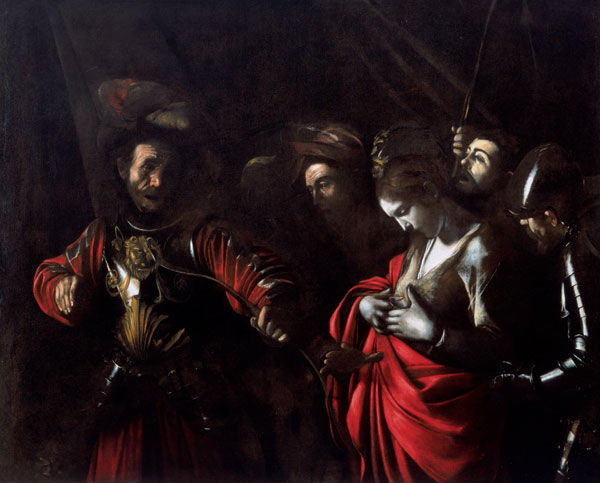
Michelangelo Merisi da Caravaggio, The Martyrdom of Saint Ursula, 1610, Oil on canvas, 143 x 180 cm


After almost 20 years, a very special painting is back on display in the UK: The Martyrdom of Saint Ursula, the last known painting by Michelangelo Merisi da Caravaggio, is the focus of the exhibition The Last Caravaggio. It opens on April 18 at the National Gallery in London.
Michelangelo Merisi da Caravaggio (1571-1610) is one of the most famous painters in history. Working in Rome for many years, he was one of the founders of the Baroque and, with his personal style, one of the most influential painters of all. Never before had his contemporaries seen anything comparable: dramatic lighting of scenes, strong contrasts of light and dark, tremendous realism and a sombre atmosphere. Caravaggio's style was particularly problematic when it came to Christian themes: with his poor-looking angels and naked Christ Child, the painter aroused both enthusiasm and rejection. His last known painting, The Martyrdom of Saint Ursula (1610), also went against convention. The saint was usually depicted holding an arrow, the symbol of her martyrdom. Caravaggio shows the moment of her death: Ursula, who refused to marry the king of the Huns who were besieging the city of Cologne, is shot by him. Ursula was one of the best-known and most popular saints in the Middle Ages. To show her moment of death so ruthlessly was more than outrageous for many of her contemporaries. The National Gallery in London is now dedicating the exhibition The Last Caravaggio to this painting in detail, taking us deep into the last months of Caravaggio's short life. Visitors can see the painting from April 18 to July 21.
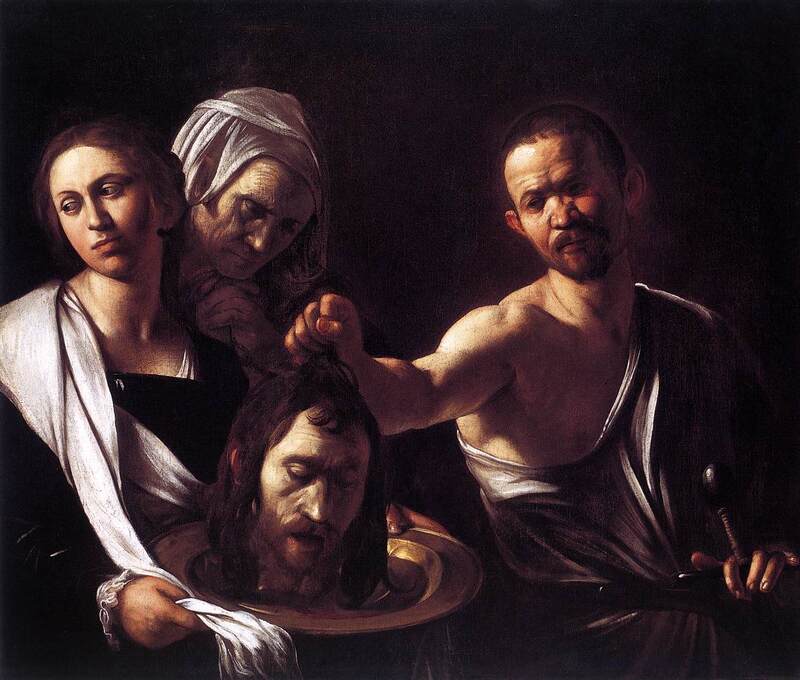
The Martyrdom of Saint Ursula has only been safely attributed to Caravaggio since 1980. The discovery of a letter, which is now kept in the Archivio di Stato in Naples and in which the commission for the painting is described, dispelled the last doubts. The letter can also be seen in the exhibition and, together with another painting, Salome receives the Head of John the Baptist (1609/10), offers deep insights into the final phase of Caravaggio's life. The painter, one of the most sought-after in Rome, the center of the Baroque, was banished from the city in 1606 for murder. Caravaggio fled first to Naples and later to Malta, where his reputation meant that he was often asked for commissions. After completing Saint Ursula, he traveled to Rome to ask the Pope for his pardon. Caravaggio died on the way there in a hospital in Porto Ercole under circumstances that remain unexplained to this day.
Her work is characterized by rhythmic surfaces that create the impression of movement. Her compositions seem to extend beyond the canvas, capturing moments that are simultaneously slipping away. Art.Salon presents the artist Marketa Hopkins.
As part of the InterNationalgalerie series, the Alte Nationalgalerie invites other institutions to exhibit in its own spaces. Kicking off the series on June 18 is the National Museum in Warsaw with the exhibition Inventing Myths.