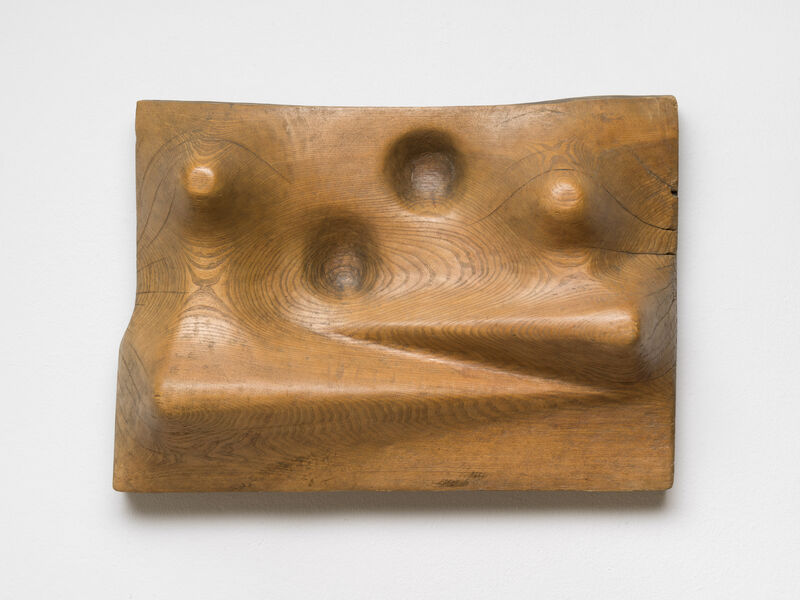
© Stiftung Matschinsky-Denninghoff, Berlinische Galerie, Foto: © Roman März
Brigitte Meier-Denninghoff, Berge, 1951


A new perspective on the work of an important sculptor: Brigitte Meier-Denninghoff. Sculptures and Drawings 1946-1970 presents previously unknown works from the artist's estate at the Berlinische Galerie. The exhibition opens on September 5.
Brigitte Meier-Denninghoff (1923-2011) is one of the few German sculptors and draftswomen who gained international recognition in the 1950s to 1970s. She was the only female sculptor and the only woman to co-found the important artist group ZEN 49, participated in the Venice Biennale in 1962, and was considered a pioneer of post-war sculpture. In 1959, Meier-Denninghoff was one of the first winners of the historically significant Prix Bourdelle. With curved and twisted forms, the artist explored the variations of Informel. Despite her success as an artist, Meier-Denninghoff is today primarily recognized as part of the successful Berlin duo Matschinsky-Denninghoff with her husband Martin Matschinsky (1921-2020). The duo's large-format works characterize the public space of many West German cities, including, for example, the sculpture Berlin (1985) in Berlin's Tauentziehnstraße near Kurfürstendamm. The exhibition Brigitte Meier-Denninghoff: Sculptures and Drawings 1946–1970 at the Berlinische Galerie is the first to evaluate the artist's estate and show a series of previously unknown sculptures, drawings, and documents that shed new light on Meier-Denninghoff's early work. The show opens on September 5, 2025, and runs for almost a year until August 3, 2026.
Brigitte Meier-Denninghoff and Marten Matschinsky worked together from 1955 onwards, and from 1970 they signed their works under the name »Brigitte and Martin Matschinsky-Denninghoff«. They also retroactively declared sculptures from the period after 1955, with which Meier-Denninghoff alone became internationally known, to be joint works. The duo was represented at the documenta in Kassel in 1959 and 1964 and also jointly at the Venice Biennale in 1990. Museums showed retrospective exhibitions of their work early on, including the Folkwang Museum in Essen (1967), the National Gallery in Berlin (1970), and the Germanisches Nationalmuseum in Nuremberg (1985). In the 1950s, brass and tin were their preferred materials, but from around 1970 they shifted primarily to chrome-nickel steel.
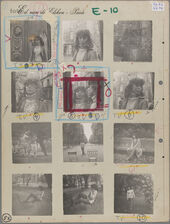
He was one of the most famous Dutch photographers of the 20th century: Ed van der Elsken captured cultural upheavals as a street and travel photographer. The exhibition Ed van der Elsken. Up Close is on view at the Rijksmuseum Amsterdam through September 13.
Art for the harmonious coexistence of the global population: At the Haus der Kunst in Munich, Argentine artist Tomás Saraceno presents visions for new forms of living together. The exhibition Tomás Saraceno. Ancestral Futures opens on July 17.