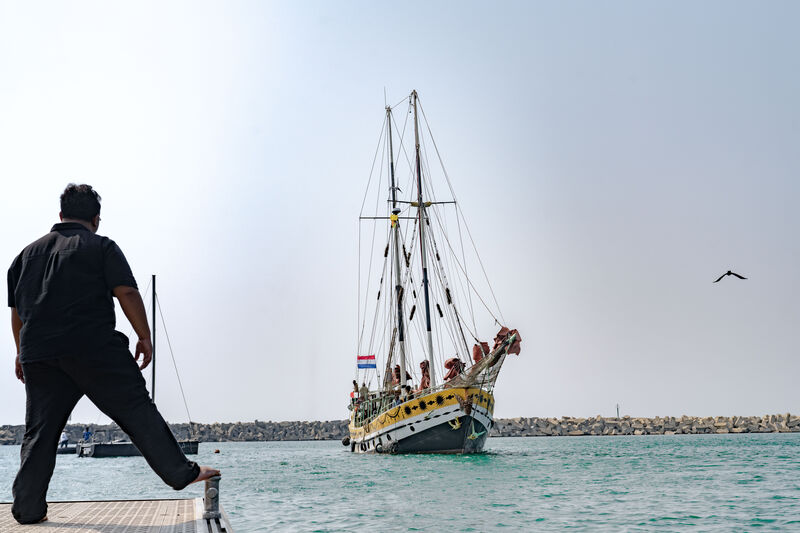
Arka Kinari, Arrival at Sail Lanka, Colombo Port, Foto: Isira Sooriyaarachchi


In January, Colomboscope, the interdisciplinary art festival in Sri Lanka that offers artists and cultural professionals a platform every two years, took place for the ninth time.
Karla de la Barra was on site and spoke with curator Hajra Haider Karrar about the festival.
Colomboscope’s 9th edition Rhythm Alliances 2026 was the largest edition of the festival to date, with over 100 interdisciplinary artists and contributors spread across several locations in Colombo. After 15 months of defining the curatorial premise, mentorship of artists and collaborations with cultural practitioners and institutional partnerships, Colomboscope presented more than 35 newly commissioned works and devoted 10 days to rhythm and its interdisciplinary soundscapes embodying remembrance, dissent, and renewal.
The exhibitions and the program including listening sessions, performances, workshops, curated walk-throughs, moderated discussions, concerts, and film screenings were highly sensitively coordinated, creating their own frequency of shared experience, co-creation, and participation. Conceived as an attunement to the diverse dispositions of rhythm, Rhythm Alliances became a celebration of contrasts that blossomed into dialogue and alliance building.
Karla de la Barra met curator Hajra Haider Karrar for a conversation at the Goethe Institute, Sri Lanka, on January 29, 2026.
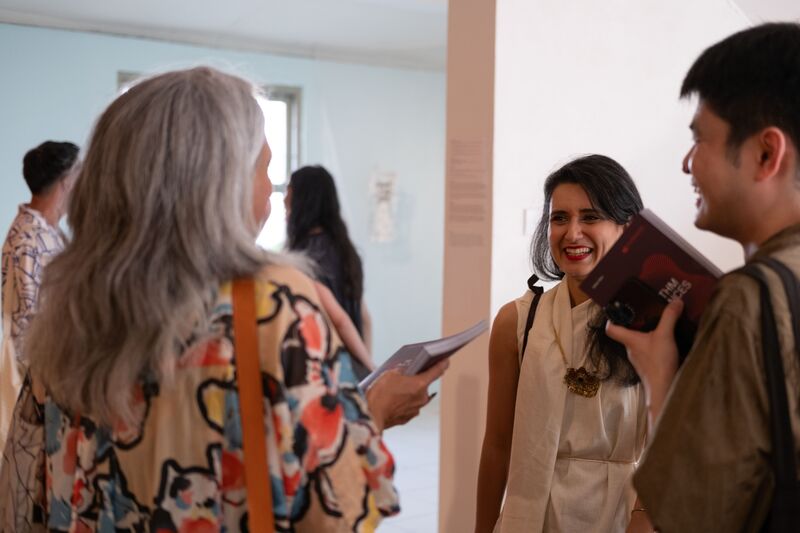
Today is the eighth day of the ten day festival. How do you feel?
Fabulous and grateful as each day unfolds with new energies and most importantly, the entire festival is up and continues to stand strong. As a curator, one works a lot with intiution in addition to research and acquired knowledge towards a vision, identifying and creating points of connection across time and geographies, initiating critical conversations and cross dialogue. Within my practice and also as per the festival ethos, this exercise focuses heavily on trans-regional connections and resonant histories that bind us together in this fractured world. Thus, to witness and experience the collective vision manifest and expand in resonance is always a magical experience. In this instance, it has been even more so, as there were quite a few new commissions and performative aspects that are partly dependent on interaction and participation from audience, and hence unfold in response to the environment and present context.
It has been also really heartening to see how the artists have engaged and responded to each other. Most of them are meeting for the first time and have beautifully bonded over their practices, discovering multiple strands of interest and engagement that brings them together, allowing for inspiring conversation and new directions.
That is a success. What would you say was the key for that?
There is a lot of groundwork that has gone into this edition and it is not just the research, conversations, and collaborations that have taken place within these past 15 months. The festival, since its inception in 2013, has gathered its own momentum, shifting pace and format as well as gaining prestige and focused vision that fulfills a crucial need in the country and South Asia has created its own niche and foundations. In addition to that framework, it is also the experience, knowledge and networks that each person in the team brings together – so beginning from the curatorial, to administrative, logistical to volunteer management, each aspect is diligently considered and covered. Colombscope is quite a small team, and it is no casual or incidental feat to have accomplished what we did. It comes with a lot of hard work, dedication and commitment to a vision that we are all passionate about but also understand the critical need for within the context of the island and beyond for the region at large that faces political tensions and divides.
For the ninth edition, there are 50 artists in the exhibition, out of which we have more than 35 new commissions. Each entailed deep engagement with the artists, thus every position has been carefully considered and intentionally brought in. The same care has been placed in the multiple aspects of the festival program and participation. Thus the fact that it coherently comes together is not surprising. However, there are often aspects that remain uncertain, you assume synergies would match but cannot determine to what extent – this applies for the team, participants and the audience. Another crucial and precarious aspect is funding, especially when aiming for non-corporate support in a non commercial setting which is becoming extremely hard with the cuts in cultural funding globally. Thus to see, Rhythm Alliances come together despite all the odds is humbling and reassuring for me.
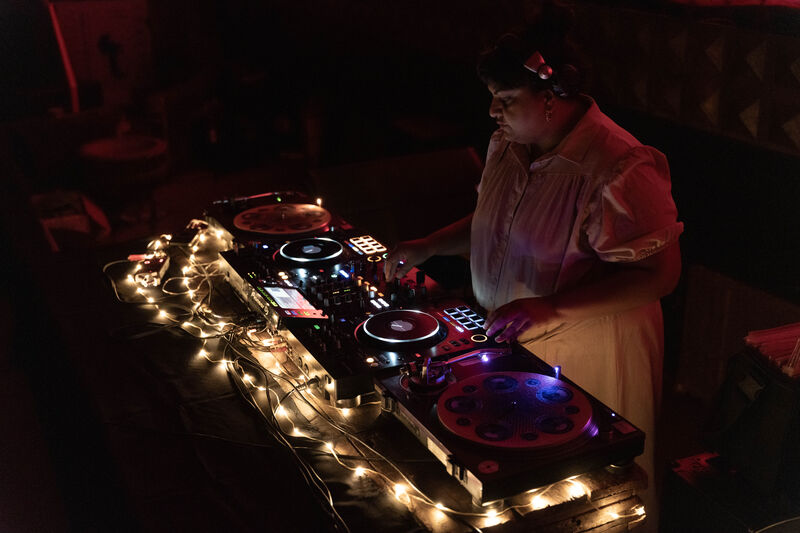
Yes, there was a special, very welcoming energy. Colomboscope is an interdisciplinary festival-do you have any preferences?
Mmm, that’s hard to say because they're all preferred. What we are working with, is an expansion and innovation of vocabularies, finding different forms of expression. Even in instances, where you experience similar materiality, it is the approach which makes it unique. Whatever the format, whatever the medium, it is about what is being said. It is about the efficiency of the medium in capturing the essence and transmitting the narrative while enhancing and supporting the experience.
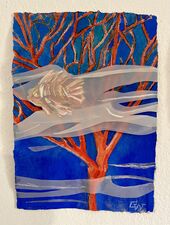
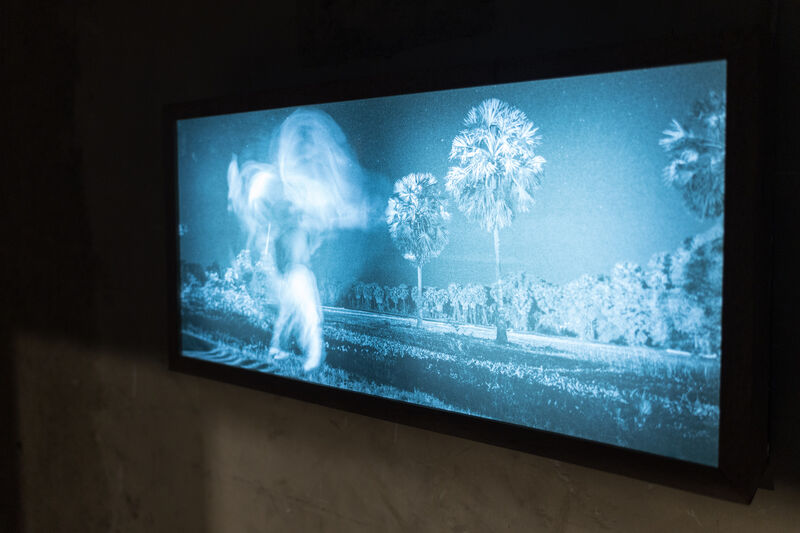
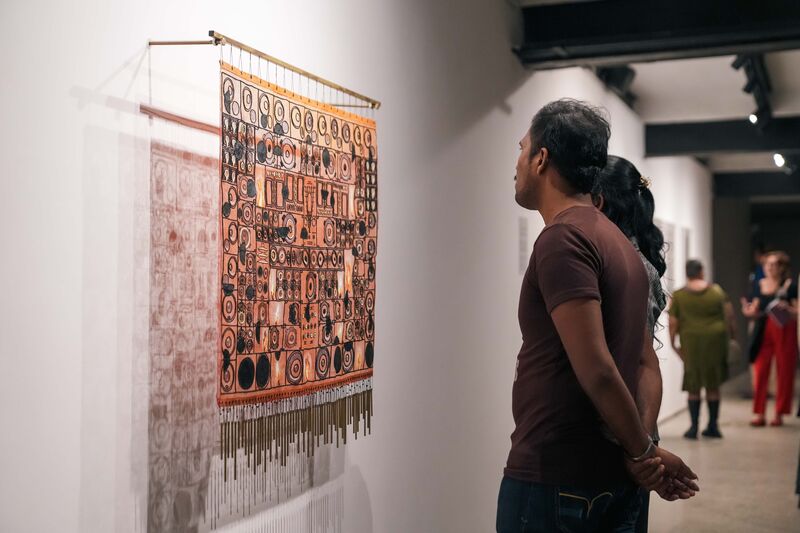
Language and orature are integral aspects of rhythm, apart from the sonic and performative aspect of it- Rhythm here is recalled and remembered, those inherited and passed on as legacies, and formed as dissent, ones created anew for the contemporary moment - a creation of new vocabulary. So whether it is through mark making or through scores or through doing embroidery or drawing, each language formation is acknowledged and cited. If you experience Seher Shah’s monographs, Woven Nights, you witness minimalist mark making that creates scores, mapping geographies of belonging. To Zarina Mohammad’s performance with masks as spirit interfaces, tracing and connecting coastal histories and paying homage to ancestral knowledge, mythology, and the environment in Observing Omens from Lightening, a three-tiered project. Jovita Alvares’s cyanotypes with embroidery mark the abscenes in familial histories that denote the larger absences in the official archives of 500 years of colonial rule over Goa in Re: cite, member, sist, while Tharmapalan Tilaxan’s dancers appear as apparitions through long exposure black and white images and light boxes, Echoes of Stillness denote a silence in the aftermath and continuation of a violent and oppressive past and present in the Northern part of the island, marking people and the land.
Colomboscope is a gift. It is free what makes it accessible to everyone. Is there something you take from this experience for future editions?
To create events and initiatives that allow free access is a political position in making culture and art as inclusive as possible, especially given the class dynamics and exclusive nature of the cultural sector. It is an important part of the festival ethos.
I am a curator at SAVVY Contemporary, Laboratory of Form-Ideas in Berlin and it is a crucial part of our ethos. We believe in radical hospitality and conviviality, and our space and events are open and free for everyone. Thus, when I was invited to be the curator for the ninth edition of Colomboscope, these resonating factors made this exchange a special instance for me and how we come together across geographies in this shared spirit.
One can witness how the festival has established itself from the ground up – listening closely to the pulse of the island, working with artists across the country, especially from the Northern and Eastern parts of the island which was previously a rare occurrence in the capital. Each edition builds up on the conversations initiated, expanding and widening the discourse and connecting it to an international milieu. Similarly, it is gaining popularity and awareness in the country, this time we have the highest numbers recorded so far, with audience numbers exceeding 700 for the Arka Kinari performance and the Matri-Anarchy: Stomping Sisters. So yes, the festival being free once again cannot be taken for granted because of its scale and how spread out it is, and its precarious funding status. It is simultaneously a platform of mentorship, engaging with the multiple layers and histories of the city, the complex histories of the island and also really thinking of transnational solidarity.
At the moment, I am just relishing in the moment, taking everything in. There is of course a lot to unpack and reflect on, in the aftermath. However, what really stands out to me is the generosity of people, nature and the elements that I have experienced and witnessed on the island. And trust, a very tricky terrain for most in a hyper-capitalistic and divided world. As you have seen, it is a very small team who have brought this festival together and have been holding it throughout.
I am from Pakistan and South Asia is such a contested territory with political tensions that those in proximity have become the most inaccessible. For the region to convene in Sri Lanka and to be able to work across where all these conversations reside in their context has been invaluable to me.
Yes. Is there anything else you want to add?
We are witnessing massive political shifts in the global order that are having dire effects and impacting the very foundations of the cultural circuit. I believe that it is crucial to focus on grassroots local initiatives like Colomboscope and similar others across the global south that share a similar ethos and pay close attention and listen carefully to what they are saying and support their work. In the midst of divisionist politics, bringing people together, strengthening transregional networks, and finding ways to continue working together through these struggles is what will sustain our futures, socially and culturally.
Thank you very much and congratulations!
Thank you so much!
One element, countless stories: Five artists from the independent group Das Bunte Bilder Kartell are presenting works of art on the theme of water in the exhibition Everything Flows. Among the exhibitors is Gabriele Weide, who is participating in the Art.Salon artist program. The opening reception will take place on July 17 at 7 p.m. at the Ballhaus in Nordpark, Düsseldorf.
In the exhibition Odilon Redon: Otherworldly Visions, the Getty Center presents charcoal drawings, lithographs, and pastels by the French artist from its own collection. The works will be on view in Los Angeles starting July 14.