

National Museum of Scotland
Raise A Paddle, Fenton Lutunatabua / 350


Oceania – Australia and the Pacific Islands – is already clearly affected by the climate crisis. Plastic waste is piling up in the world's oceans and sea levels are rising. From August 12, the National Museum of Scotland in Edinburgh will turn its burning glass on the threatened state of the planet with contemporary artworks and historical artifacts – to inspire hope and motivate action.
From August 12, the National Museum of Scotland in Edinburgh will focus on the impact of the climate crisis on Australia and the Pacific Islands. The focus is on Oceania, where sea levels are already rising noticeably and the oceans are becoming increasingly saturated with plastic. In Rising Tide: Art and Environment in Oceania, contemporary Australian and Pacific artists explore the damaging relationship between humanity and its environment. In particular, they respond to the twin »problem children« of climate change and plastic waste. For example, master fisherman Anthony C. Guerrero collects plastic ribbons and scraps washed up on his Guam beach and weaves baskets from them using traditional techniques.
The latest version of George Nuku's installation Bottled Ocean 2123 imagines the state of the oceans 100 years from now – single use plastic bottles dot the underwater world in his dystopian view. He focuses on the importance of single use plastic to people who, despite knowing the damage it does, won't turn away from it.
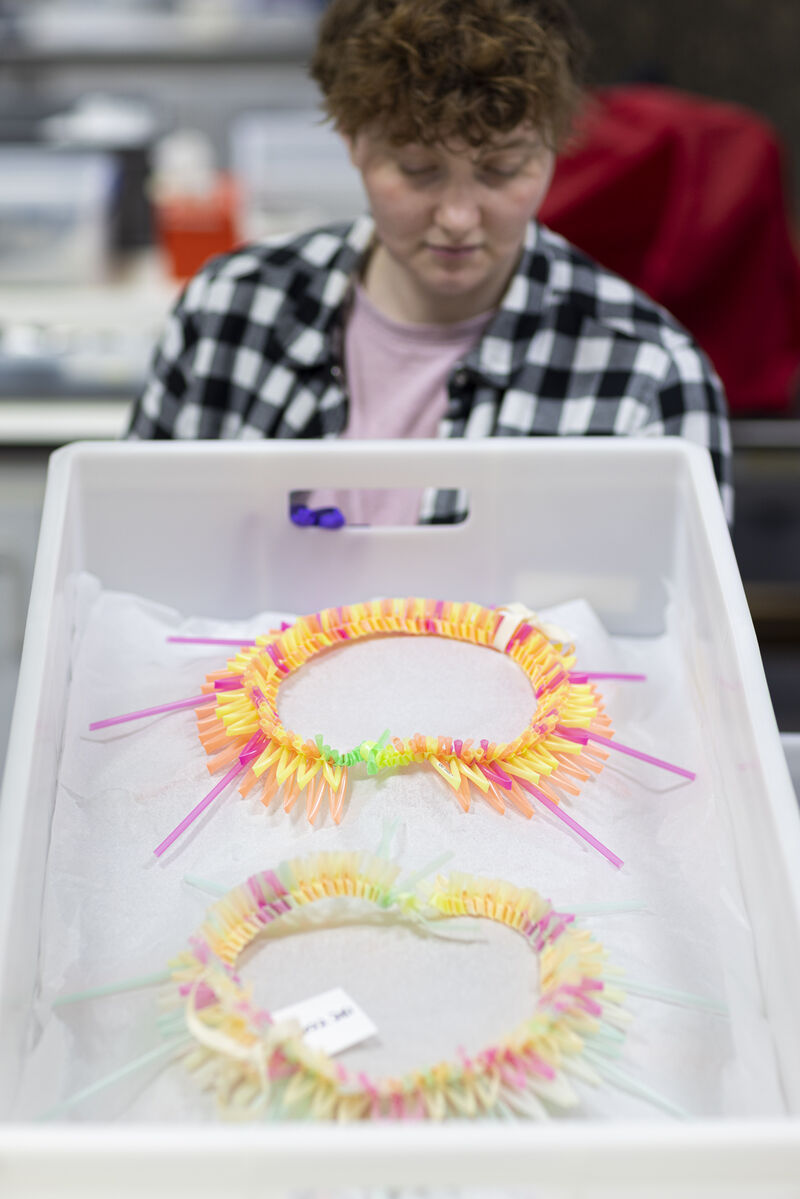
Rising Tide aims to create a wide circle of thought in the audience. In light of Oceania's precarious situation, it aims to highlight the need for action, but also to showcase the strength and resilience of diverse communities. At the same time, the exhibition seeks to convey »a sense of optimism for the future,« as curator Alison Clark assures us.
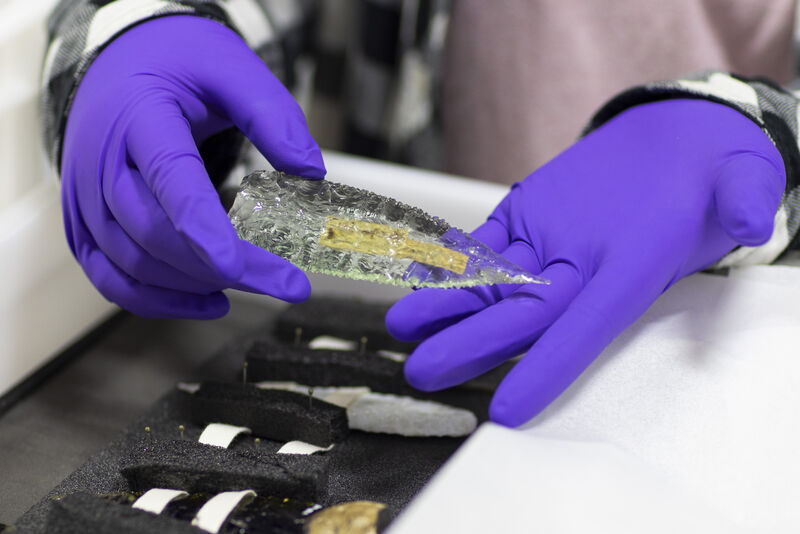
In addition to contemporary works, the National Museum is also exhibiting historical objects from its collection: Spearheads from the Kimberley region of Western Australia, for example, made by Aboriginal men from discarded glass bottles. The spearhead is a recurring theme throughout the exhibition, the museum says, and serves as a symbol of the creative power of Oceania's indigenous peoples. Rising Tide: Art and Environment in Oceania is part of the Edinburgh Art Festival, which runs from August 11 to 27. However, the exhibition itself will not close until April 14 next year.
Continuation of the anniversary exhibitions: In 2026, Georg Brandner will celebrate his 70th birthday and his 50th anniversary as a freelance artist. He is presenting his works in various Austrian cities, with the next stop being Wolfsberg: On June 30 at 6:30 p.m., the exhibition Georg Brandner – 70 Years of Art will open at Galerie Atelier Berndt.
An exhibition on the conservation and restoration of unusual materials in works of art: On June 27, the Stedelijk Museum voor Actuele Kunst in Ghent will open the exhibition Joseph Beuys | Wirtschaftswerte: a conservation history, centered on Beuys’s renowned work.