Important work of art made of alabaster

Extensive restoration of the Rimini Altar completed

After four years of extensive conservation and restoration work, the restoration of the Rimini Altar has been completed. From 3 November 2022, the important late medieval work of art made of alabaster will be on display again as part of the special exhibition Mission Rimini in Frankfurt's Liebieghaus Sculpture Collection.

November 01, 2021
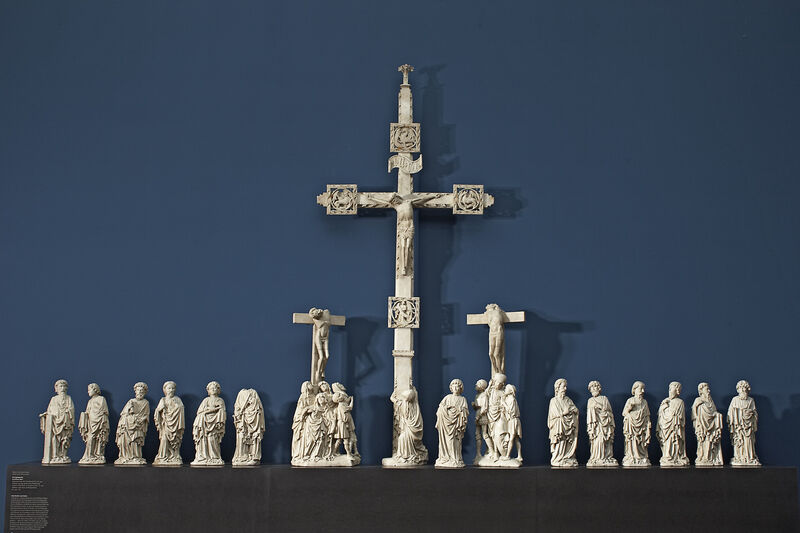
Crucifixion altar from Rimini, South Netherlands around 1430 (condition before restoration)
Photo: Liebieghaus Skulpturensammlung
Master of the Rimini Altar Crucifixion altar from Rimini, Southern Netherlands, c. 1430 (condition before restoration) Alabaster, small remains of old version Liebieghaus Skulpturensammlung, Frankfurt am Main

The Rimini Altar (c. 1430) is considered one of the world's most extensive and important as well as one of the best-preserved late medieval works of art made of white alabaster. Extensive conservation and restoration work has been carried out on it in the Liebieghaus Skulpturensammlung's exhibition workshop over the past four years, and now the altar will be on display again after its extensive restoration from 03 November 2021. In the special exhibition Mission Rimini, the Liebieghaus restorers Harald Theiss and Miguel González de Quevedo Ibáñez as well as Stefan Roller, Head of the Medieval Collection, will discuss the challenges and results of the international restoration project with visitors. They will also explain the characteristic properties of the material alabaster, the original colour of the artwork, as well as the art-technological analysis. The highlight of the exhibition, which runs until 24 April 2022, is the presentation of the altar in a display that is based on the design of contemporary Dutch altars.

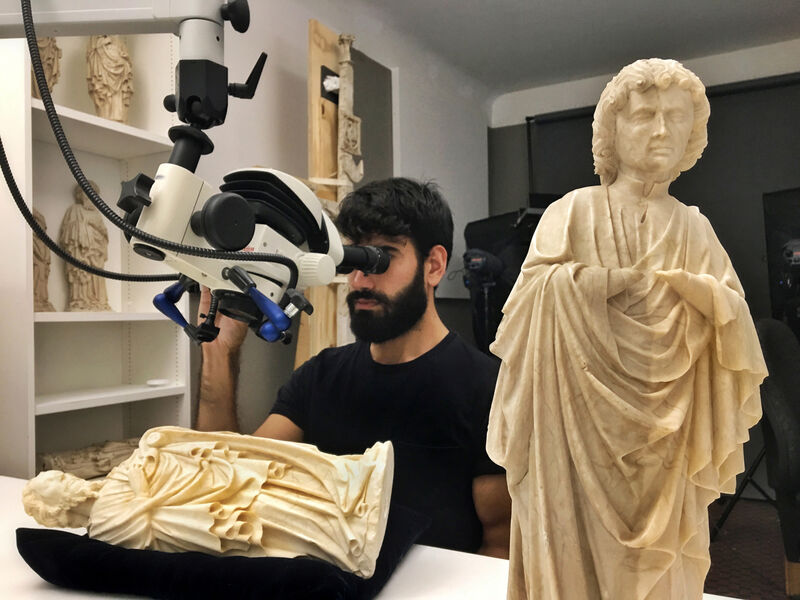
The restoration work on the Rimini Altar, one of the main works of the Liebieghaus Skulpturensammlung, could be followed in the museum's exhibition workshop as well as through educational and outreach activities. During this process, a particularly gentle surface cleaning of the work of art was carried out primarily via laser technology and gypsum-saturated agar gel compresses. In addition, the altar was subjected to an extensive art-technological examination, from which fundamental insights into the technical construction of the altar were determined and the quarrying area of the alabaster stone could be traced. These impressive results provide new impulses for art historical research on the oeuvre of the Rimini Master.Art.Salon

Workshop situation restoration Rimini Altar
Photo: Liebieghaus Skulpturensammlung
Workshop situation Restoration Rimini Altar Liebieghaus Skulpturensammlung, Frankfurt am Main

Dive deeper into the art world

Wolfsberg: Georg Brandner’s Anniversary Exhibition

Continuation of the anniversary exhibitions: In 2026, Georg Brandner will celebrate his 70th birthday and his 50th anniversary as a freelance artist. He is presenting his works in various Austrian cities, with the next stop being Wolfsberg: On June 30 at 6:30 p.m., the exhibition Georg Brandner – 70 Years of Art will open at Galerie Atelier Berndt.

June 26, 2026
Ghent, Stedelijk Museum voor Actuele Kunst

An exhibition on the conservation and restoration of unusual materials in works of art: On June 27, the Stedelijk Museum voor Actuele Kunst in Ghent will open the exhibition Joseph Beuys | Wirtschaftswerte: a conservation history, centered on Beuys’s renowned work.

June 26, 2026