


Rising Star
Jordan Casteel – Focus on the individual personality
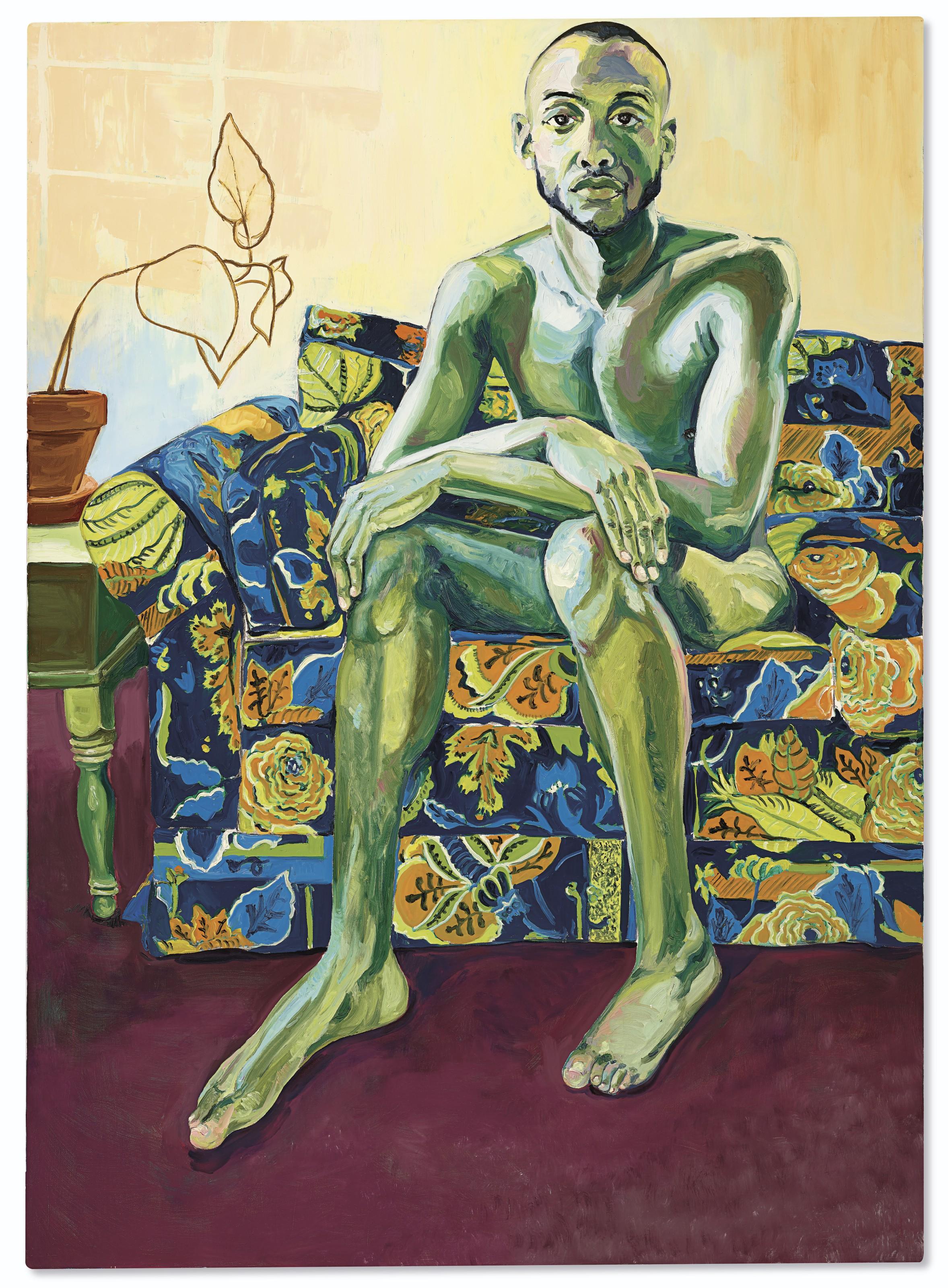
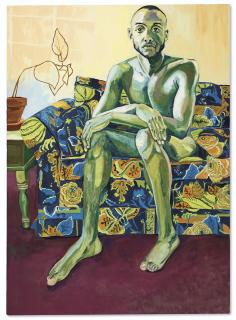
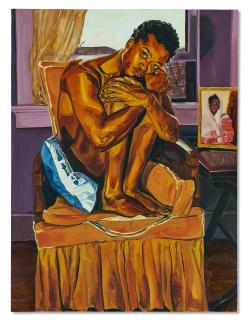
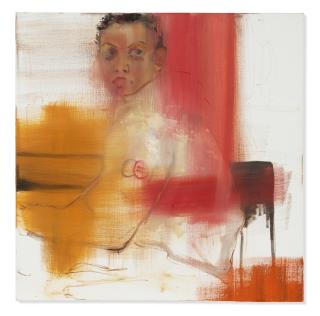
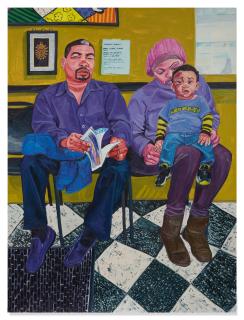
The portraits of the young artist Jordan Casteel show people in everyday life situations from the middle of US society, who have long been underrepresented in the American art world. With her works, she manages to make these unseen people visible, to change our perspective, and to bring their individual personalities to the fore. Now the international art market is also becoming increasingly attentive to the artist.
by Joanna Gründel,
September 12, 2021
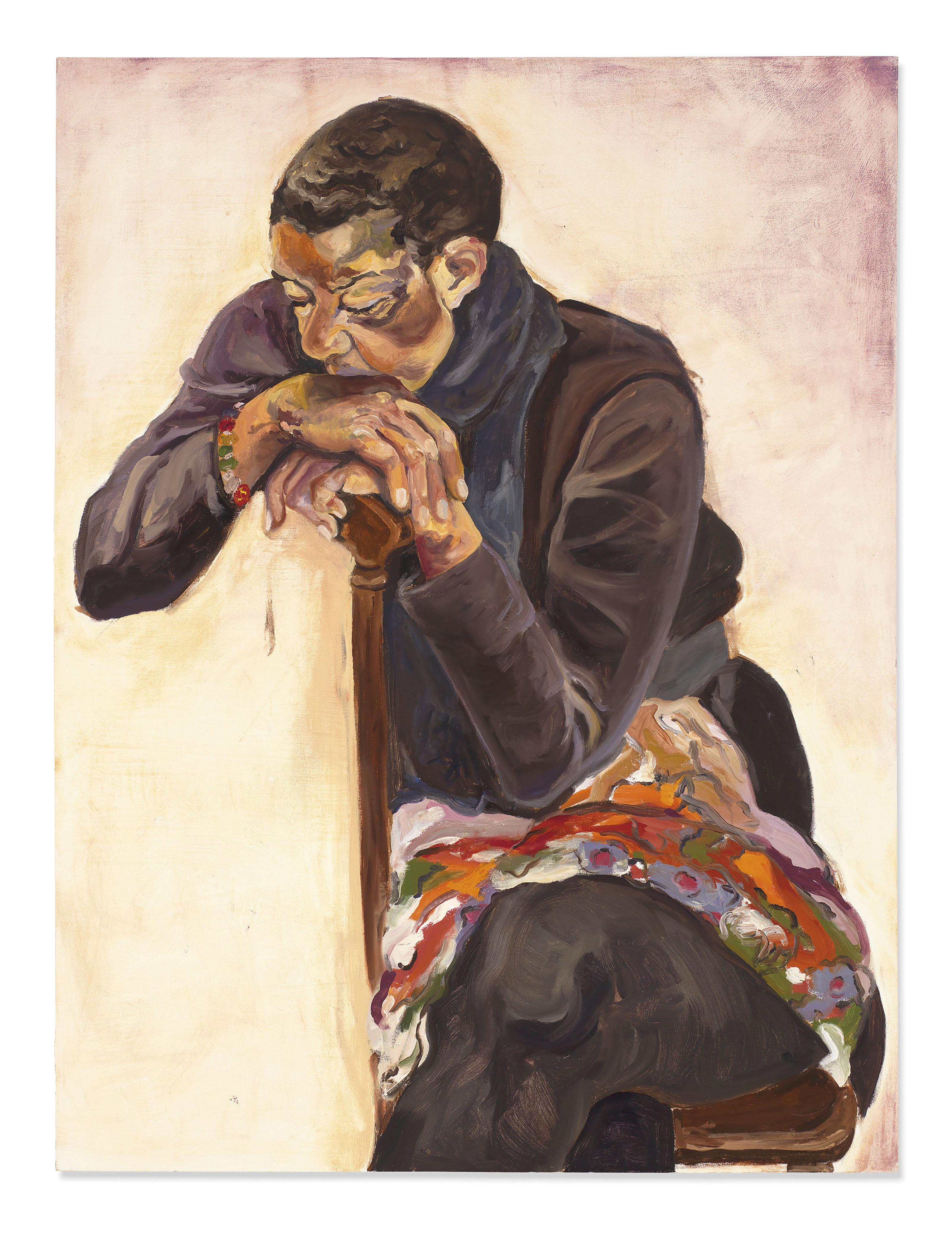
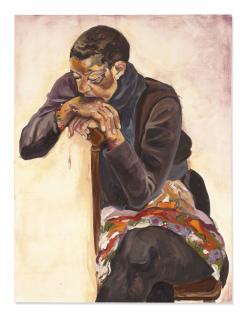
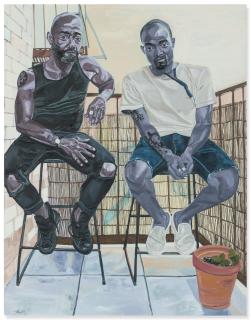
In her paintings, Jordan Casteel directs attention to people who still all too often remain unseen in U.S. society, thus influencing social discourse far beyond the art market. Her mostly life-size portraits, predominantly of African-Americans, show people in everyday, true-to-life situations. In doing so, she gives a face to people who have been ignored by the (art) establishment, which has been white for a long time, and who have increasingly been brought into focus by numerous artists in recent years. After a first successful solo exhibition at Sargent's Daughters in New York in 2014, she quickly gained visibility in the art market, followed by numerous exhibitions, awards and reviews in newspapers such as the New York Times. For the past three years, her works have also been found on the secondary market, regularly fetching six-figure sums at international auctions. Without question, Jordan Casteel, at only 32 years of age, is currently one of the »Rising Stars« of the art market - and one worth taking a closer look at in every respect.
At home in the art world
Born in Denver, Colorado, in 1989, Casteel lived in an engaging and artistic environment from an early age. Her father, business consultant Charles L. Casteel, was an early systematic collector of works by Black artists; her mother, Lauren Young Casteel, was president of the Women's Foundation of Colorado, which promotes the local advancement of women; and her grandmother, Margaret Buckner Young, served on the board of the Metropolitan Museum of Art in the 1980s. So Casteel doesn't lend herself to the narrative of an outsider fighting her way to the top against all odds, yet she later had to overcome significant hurdles to not only be shown, but to be seen.
Despite initial doubts about whether painting would be a profitable livelihood for her, Casteel took up art studies, first at the Lamar Dodd School of Art and later at Agnes Scott College, both in Georgia. During a year abroad in Cortona, Italy, she discovered oil painting for herself, but after earning her bachelor's degree, she initially decided to teach and not pursue a life as a freelance artist. A decision that was not to last too long, as just one year later she continued her studies at the Yale School of Art, graduating in 2014 with a Master of Fine Arts in painting and printmaking. In the summer of the same year, she received an offer for her first major solo exhibition in New York, which went anything but unnoticed.
Encouragement for the wrong reasons
In 2012, while Casteel was completing her studies at Yale, an act of racial violence once again shook the liberal sector of society in the U.S. - an event that would significantly influence Casteel's art and continue to shape it to this day. In an altercation, George Zimmerman, the head of a neighborhood watch in Sanford, Florida, shot and killed Trayvon Martin, a 17-year-old African-American high school student, in claimed but less than plausible self-defense. Local police initially saw no reason to investigate the incident further, and an indictment came only after public pressure, ending in an acquittal. The incident not only stirred up large parts of the U.S., but also Jordan Casteel personally, who then became increasingly concerned with issues of racism, exclusion, violence and participation and began to address these pressing issues in her art. She began to portray primarily African-Americans, predominantly young men, and thus moved precisely those people into the center of her art who are underrepresented in the American establishment and who are disproportionately victims of violent crime and, not least, of police violence.
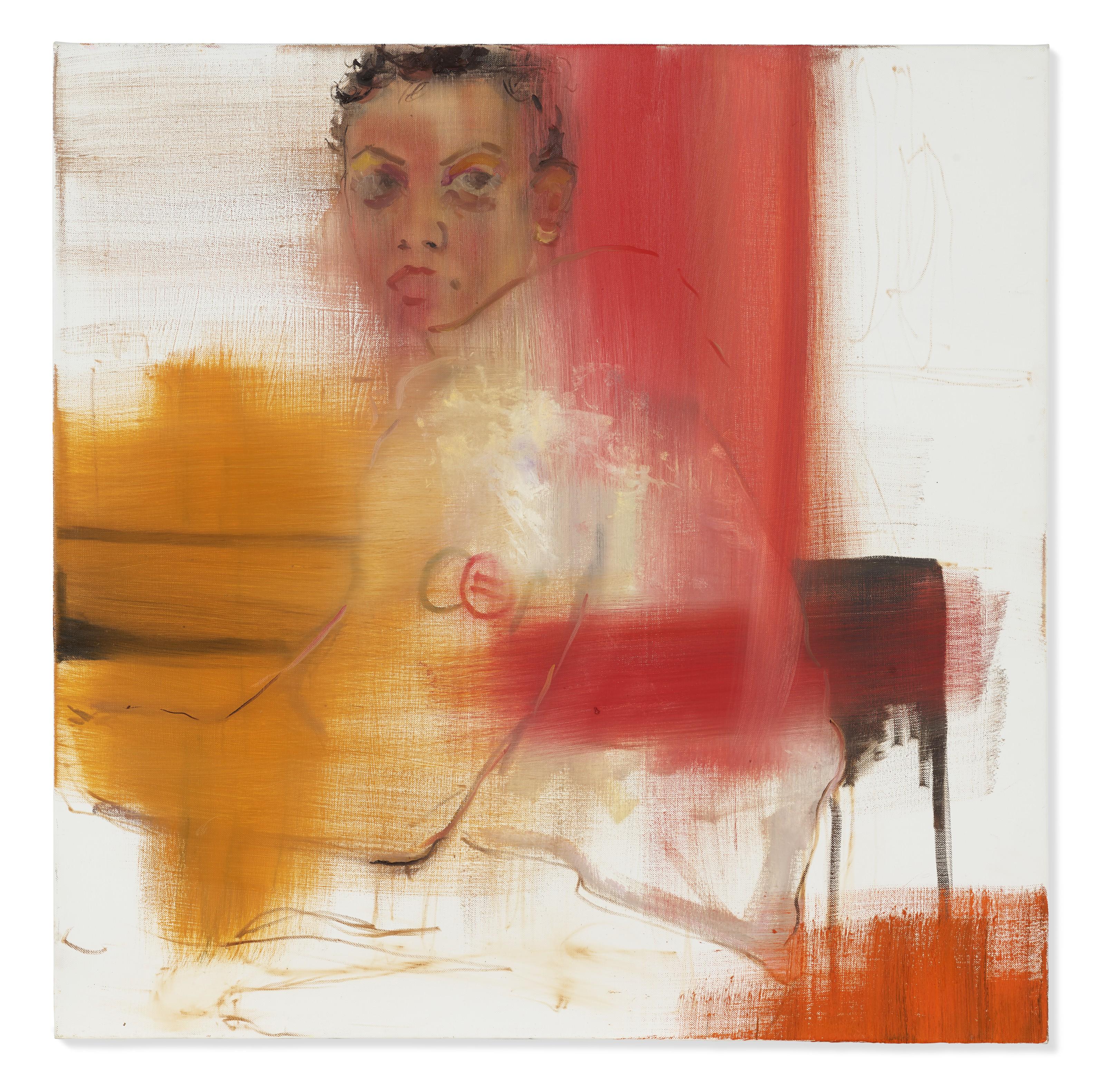
The reception of her paintings in the art world, however, was not free of misunderstandings - an unintentional reflection of the communicative dissonances that quite obviously exist between the various social groups in the United States. One of her early works, for example, showed a friend wearing a Nike »You Mad« T-shirt and an Atlanta Falcons cap - for Casteel a matter-of-course everyday outfit, for the established art world the visual code for assigning a person to the Black community. The art world thus understood that the focus was suddenly being placed on people who had previously received little attention in established art, but Casteel did not succeed in actually giving the portrayed a face, because the viewers mainly focused on the superficial ciphers and were hardly concerned with the portrayed person himself. Although the picture received a great deal of attention, Casteel must have felt this as an inner defeat, since she wanted to steer society's gaze in a new direction and received approval precisely where the art establishment unconsciously saw its prejudices about social codes confirmed.
»You mad sister?«
Casteel therefore sought an approach to direct the viewers of her pictures more strongly, to force them to perceive the individual person and not to remain stuck on the surface of their own prejudices. An undertaking that proved to be extraordinarily difficult, for it places her in a field of tension between deeply rooted mutual prejudices between various social groups on the one hand, and on the other, an unmanageable cacophony of all those innumerable voices that feel called upon to pass binary judgments on the »correct« representation of members of the most diverse groups.
Casteel decided to liberate the men in her portraits from some social codes and depict them unclothed. In doing so, she also refrained from depicting the genitals, as she feared that otherwise she would be encouraging the fetishization and hypersexualization of Black people and thus the next cliché. Anyone who ventures into this thematic field cannot do so without experiencing considerable criticism from one direction or another, and this is exactly how Jordan Casteel experienced it. On the one hand, she was accused of emasculating men, while at the same time she was criticized for capitalizing on the depiction of naked male bodies as a woman.
»Sister, you are the queen of capturing the souls of brothers.«
Fortunately, some criticism disqualifies itself, and so Casteel felt encouraged in her path precisely by the opposition. Her portraits do not depict archetypes for being black in the U.S., any more than they depict stylized masculinity or other stereotypes. Rather, they depict individual personalities with unique imprints, experiences, and histories, and so it was precisely fathers and sons, brothers and husbands that were featured in her first major solo exhibition in 2014, titled Visible Man.
She remains true to this approach to this day; even if the portrayed people are now wearing clothes again and women, children and couples are also among the motifs, the focus is always on the individual personality. Casteel always directs the view to the individual person and thus moves him or her into the focus of social discourse. This is a convincing affirmation of her artistic path, for she wanted to achieve nothing else with her early portrait of the young man in the "You Mad" shirt. But the most important affirmation for her may well be the encouragement from those whom she lifts onto the stage with her art, for example when the African-American musician and cultural producer Greg Tate attests to her: »Sister, you are the queen of capturing the souls of brothers.«
Jordan Casteels auction successes



A »Rising Star« on the Art Market
Parallel with her artistic development, recognition among art critics and success in the art market also grew. Forbes listed her on the 30 Under 30 list for Art & Style 2019, and Agnes Scott College honored her as Outstanding Young Alumni 2021. She and her work have graced the covers of numerous magazines including Vogue, for which Casteel portrayed Aurora James, and Time Magazine, which selected her work God Bless the Child for the cover of its special Visions of Equity issue.
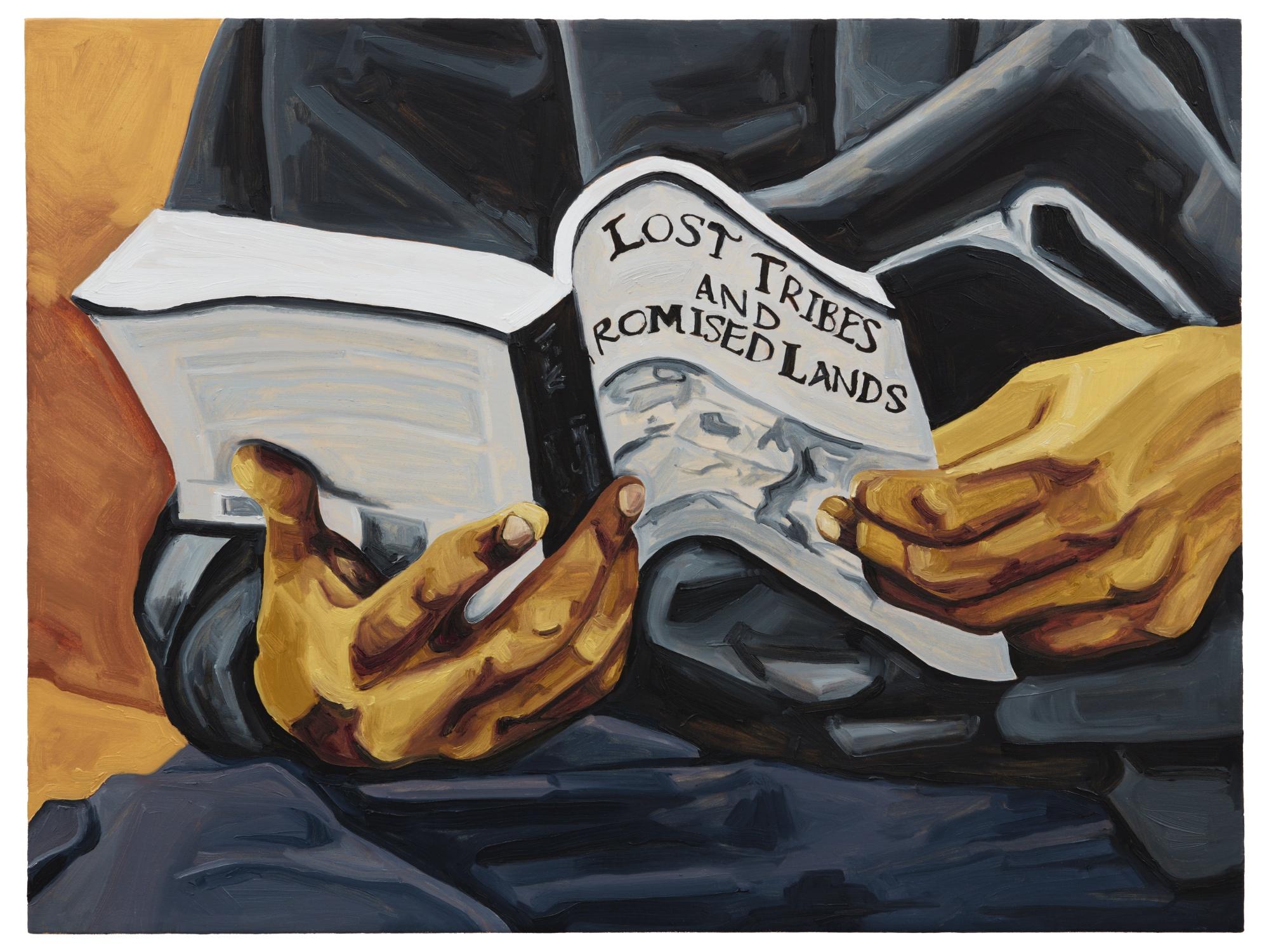
Since 2018, her first works have hit the auction market-with remarkable price momentum. »Bargains« like in 2018, when the work Lost Tribes changed hands for 81,250 USD (after all, more than four times the upper estimate price) are probably no longer to be had today; in the meantime, her works regularly fetch mid-six-figure sums. Jordan Casteel therefore not only promises an exciting artistic development, but is also increasingly establishing herself as a »Rising Star« on the art market.


More on the subject Artist Portraits
Efraim Habermann

»Photography is my work - watercolors are my pearls.«
by Felix Brosius,
February 04, 2023
With city views of Berlin, Efraim Habermann became known to a broad public as a photographer in the 1960s. His works are characterized early on by a distinctive, concise style and unusual perspectives. Today, after a 50-year creative phase, he has an extensive body of photographic work, consistently in black and white, with numerous series from Israel, Venice and Berlin, still lifes, portraits and photographic collages. Habermann's »pearls«, his mostly constructivist watercolors, geometric forms in strong colors, finely balanced into a postcard-sized composition, seem almost like a commentary on his own conception of the image. An extensive exhibition of works from the artist's private archive can now be seen in Berlin from mid-February.
From street artist to painting star: Nicolas Party
The world in pastel
by Marius Damrow,
December 12, 2022
With simple portraits and landscapes in pastel, the Swiss painter Nicolas Party succeeded in rising to the top of the art league. The former graffiti artist captivates with universal themes and used the pandemic for monumental projects.

Dive deeper into the art world
Frankfurt am Main, Städel Museum
The Unique Compositions of Pieter Bruegel
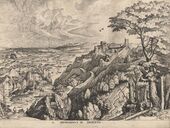
Pieter Bruegel the Elder is one of the most famous painters of his time, but his contemporaries primarily valued his idiosyncratic drawings, which served as models for prints. In the exhibition Bruegel Printed, the Städel Museum focuses on this aspect of his work. The exhibition runs through September 20 in Frankfurt am Main.
July 27, 2026
The Cleveland Museum of Art
Printmaking in the Renaissance – The Renaissance of Printmaking
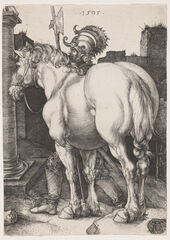
Around 1500, woodcut and copperplate engraving developed into distinct art forms: Drawing on works from its own collection, the Cleveland Museum of Art presents the exhibition The Renaissance Engraver at Work. The exhibition runs through November 1 and also features extremely rare prints.
July 24, 2026
