New York: The Metropolitan Museum shows George Morrison

The Aesthetics of the Magical City

Abstractions of urban life: George Morrison was an influential abstract expressionist and was particularly fascinated by the city of New York. 25 of his most important works are on display in The Magical City: George Morrison's New York at the Metropolitan Museum from July 17.

July 17, 2025
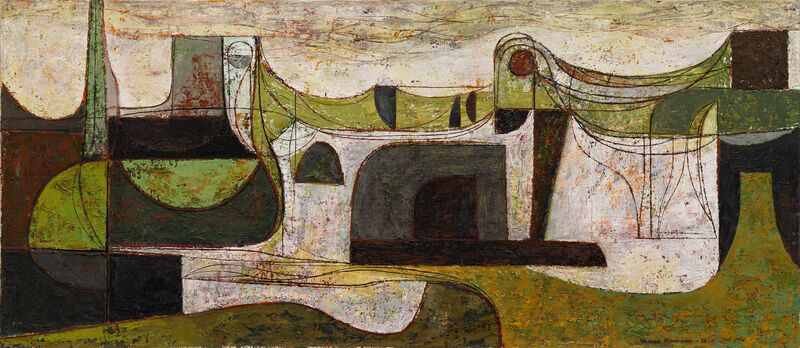
George Morrison (Native American, Grand Portage Chippewa, 1919–2000), Structural Landscape (Highway), 1952
© George Morrison Estate
George Morrison (Native American, Grand Portage Chippewa, 1919–2000), Structural Landscape (Highway), 1952, Oil on canvas, 22 1/2 x 50 in. (57.2 x 127 cm), Joslyn Art Museum, Omaha, Museum purchase

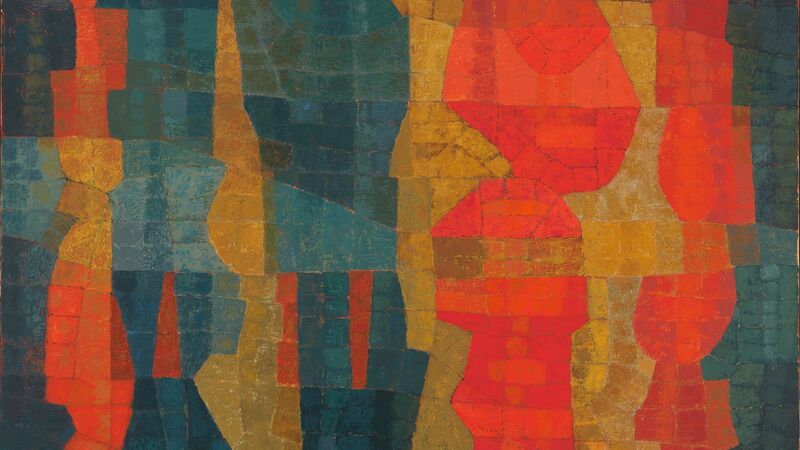
In 1943, George Morrison (1919-2000) moved to New York to study painting and drawing. It was here that he first came into contact with modernist art movements, particularly Cubism and Surrealism, and within a few years he himself became a central figure in Abstract Expressionism. Morrison, a member of the Grand Portage Band of Chippewa from Minnesota, was inspired by both urban life and indigenous American and Australian art. The exhibition The Magical City: George Morrison's New York focuses on the artist's love for the world-famous city, which he himself called a »magical city«, and how it influenced him aesthetically. From July 17, 2025 to May 31, 2026, the Metropolitan Museum in New York will present 25 of the most important paintings and drawings from the artist's early years, as well as rare archival material that sheds light on Morrison's role at the center of abstract expressionism.

In a career spanning over six decades, Morrison created paintings, drawings, prints and sculptures of great thematic diversity. He had over 50 solo exhibitions during his lifetime, his first in 1948 at the Grand Central Moderns Gallery in New York. Although he drew inspiration from indigenous art, he actively worked against being seen as an »Indian artist«: »My own work falls in a direction of art that my type of experience and training gives–into the mainstream of the avant-garde of American art. My own sensibilities, the influences, and the attitudes that shaped my art were broad in scope. I have never painted the so-called Indian themes; I have never been social conscious in my painting; I have never tried to prove that I was Indian thru [sic] my art […].« Morrison also taught at the Rhode Island School of Design from 1963-1970 and then at the University of Minnesota until 1983. His works can be found in numerous public collections, including the National Gallery of Art, the Smithsonian American Art Museum and the Whitney Museum of American Art. A complete catalog raisonné is currently being compiled.Art.Salon

George Morrison (Native American, Grand Portage Chippewa, 1919–2000), The Antagonist, 1956
© George Morrison Estate
George Morrison (Native American, Grand Portage Chippewa, 1919–2000), The Antagonist, 1956, Oil on canvas, 34 1/8 x 50 1/16 in. (86.7 x 127.2 cm), Whitney Museum of American Art, New York, Gift of Mrs. Helen Meredith Norcross

Dive deeper into the art world

Augsburg, Schaezlerpalais

On the 500th anniversary of Jakob Fugger's death on December 30, the Schaezlerpalais is commemorating him as a patron of the arts: the wealthy merchant family commissioned numerous artists of their time. The exhibition Art’s Rich Heritage: Jakob Fugger and his Legacy runs until April 12, 2026, in Augsburg.

December 17, 2025
Berlin, Käthe Kollwitz Museum

The Käthe Kollwitz Museum presents the sensitive side of the artist through rarely seen drawings and trial prints: Käthe Kollwitz – Silent Strength runs until January 18, 2026, in Berlin.

December 16, 2025