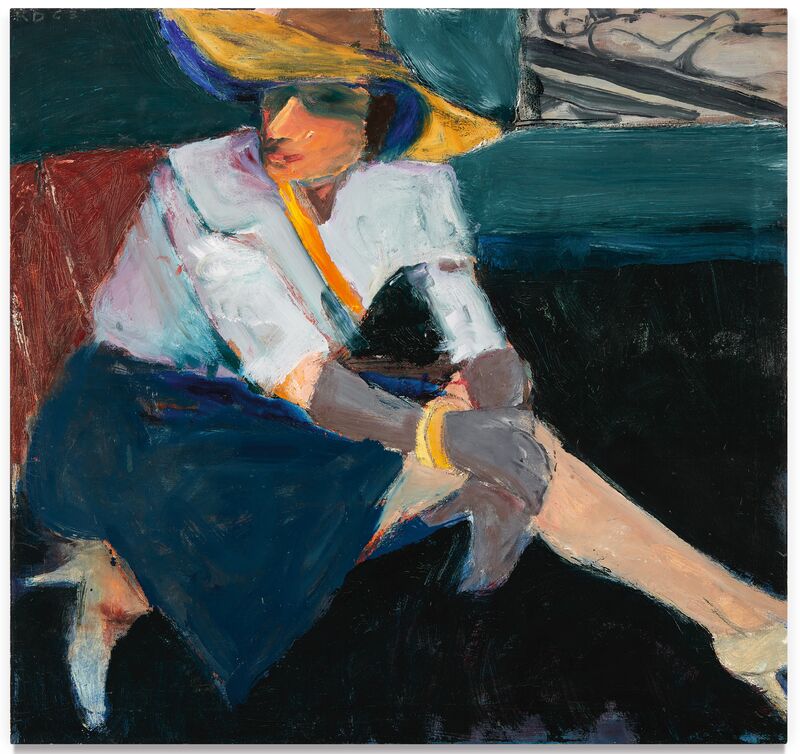
Richard Diebenkorn, Woman in Hat and Gloves, 1963, Oil on canvas, 33 3/4 x 36 in. (85.9 x 91.4 cm), Private collection


The painting gave its name to Fauvism, the first French avant-garde movement of the 20th century: Henri Matisse’s Femme au chapeau (Woman with a Hat) shocked the art world in 1905. Since 1991, it has been housed at the San Francisco Museum of Modern Art, which is exploring the painting’s history in unprecedented detail: Matisse’s Femme au chapeau: A Modern Scandal opens on May 16.
It is one of the most famous paintings in European art history: Femme au chapeau (Woman with a Hat) (1905) by Henri Matisse (1869–1954) depicts a portrait of his wife Amélie in seemingly swiftly applied brushstrokes and an unrealistic color palette dominated by shades of blue and green. First exhibited publicly at the Salon d’Automne in Paris, it shocked the audience and inspired the name of the art movement known as Fauvism. Gertrude Stein purchased the painting on the last day of the exhibition together with her brother Leo; it hung as a central piece in her apartment, where numerous cultural figures gathered and exchanged ideas. In the U.S., it was first shown in 1936 at what is now the San Francisco Museum of Modern Art. The museum, one of the largest U.S. museums of modern and contemporary art, received it as a gift in 1991. A condition of the gift was that the painting could not be loaned to other institutions, which is why it can only be seen there. The current exhibition takes an in-depth look at the creation and history of the painting and the influence it had on Matisse’s work. Matisse’s Femme au chapeau: A Modern Scandal runs from May 16 to September 13.
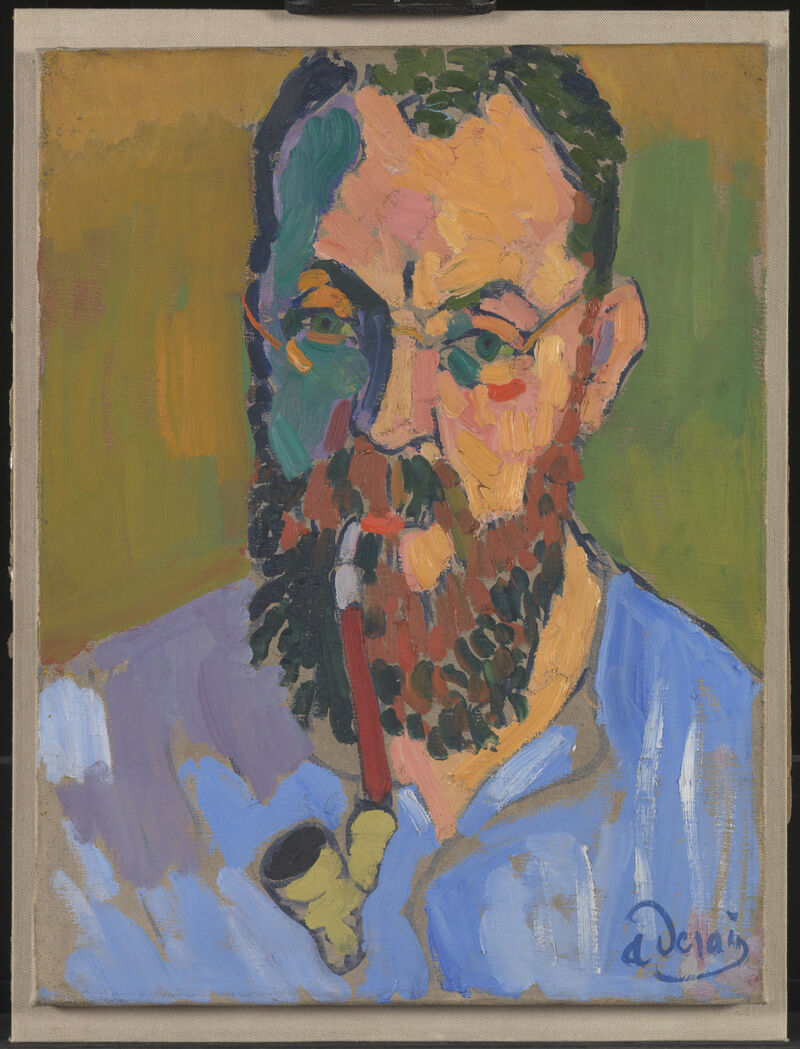
The exhibition begins by introducing the model Amélie Matisse, who worked as a milliner and served as both a creative support and a manager for the painter. An examination of early 20th-century fashion offers illuminating insights into her choice of the prominently featured hat when she posed for the painting. Furthermore, the exhibition conveys a sense of the original presentation at the Paris Salon d’Automne: In one room, Femme au chapeau is displayed alongside works by the other nine artists who participated in the Salon at the time, including Charles Camoin, André Derain, Henri Manguin, Albert Marquet, and Maurice de Vlaminck. For it was not only Matisse’s painting but the entire exhibition that caused a sensation, sparked heated debates, and also drew admiration. Finally, the exhibition recounts how the famous painting and other Fauvist works by Matisse influenced subsequent artists, such as Jacqueline Marval, Jean Metzinger, Hilary Harkness, Rachel Harrison, and David Hockney.
In the exhibition Odilon Redon: Otherworldly Visions, the Getty Center presents charcoal drawings, lithographs, and pastels by the French artist from its own collection. The works will be on view in Los Angeles starting July 14.
Paintings, ceramics, tapestries The PuurKunst exhibition features about 10 works by Jacqueline Corman (JacqC) from the Art.Salon artist program, alongside 11 other diverse artistic positions. The exhibition runs from July 17 to 21 at the City Halls beneath the Belfry in Bruges.