Provided by Ria Groenhof.
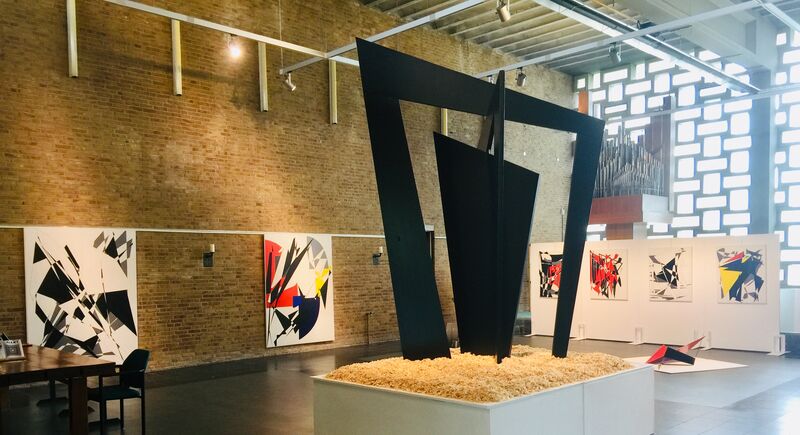
Museum Nagele, exhibition


Dutch artist Ria Groenhof, who also uses the artist name Atelier 85, has been working as a freelance artist for 40 years. Whether monumental sculptures in public spaces or paintings on canvas, her work combines the clarity of geometry with existential questions. The Art.Salon presents the artist's multifaceted oeuvre.
Geometric-abstract art in the land of geometry: in 2019, Dutch artist Ria Groenhof had a major retrospective at Museum Nagele, not far from her home in Lemmer. The special thing about Nagele is that it is a planned village with a strictly geometric street structure – built on new, man-made land. An ideal location for Groenhof's geometric-abstract sculptures and paintings. The artist even incorporated the surrounding area into her exhibition by means of a 15 km long walking and cycling route, which she laid out herself. With a keen sense of line, surface and space, she has developed an unmistakable artistic signature that oscillates between geometric rigor and poetic openness. »I eagerly dive into this realm where I explore the boundaries of perception and understanding«, says Groenhof about her work.
30 years earlier, Groenhof made her debut in 1989 with her first solo exhibition in Drachten. The artist, who completed her studies in sculpture and environmental design at the AKI ArtEZ in Enschede in 1985 and also uses the artist name Atelier 85, presented geometric-abstract paintings. They attracted attention with an innovative approach: the artist combines strict basic forms, primarily in primary colors, with structures of thin lines reminiscent of architectural constructions, thus uniting abstract and figurative elements. Groenhof weaves several perspectives onto one canvas.
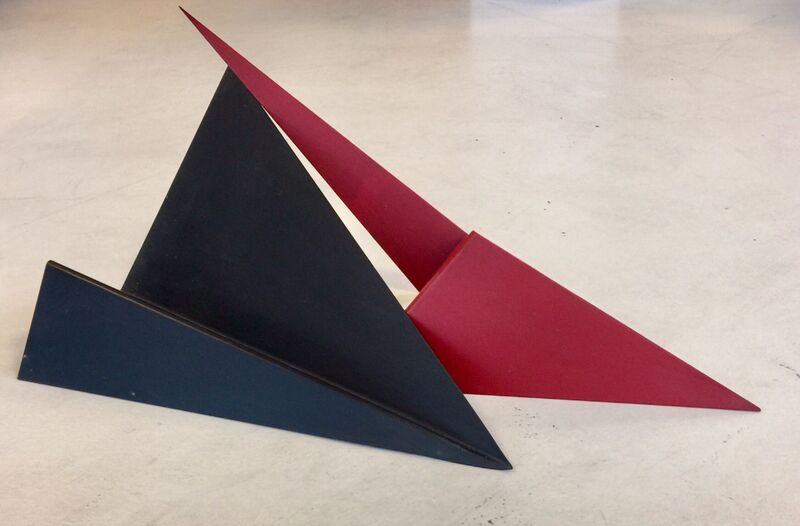
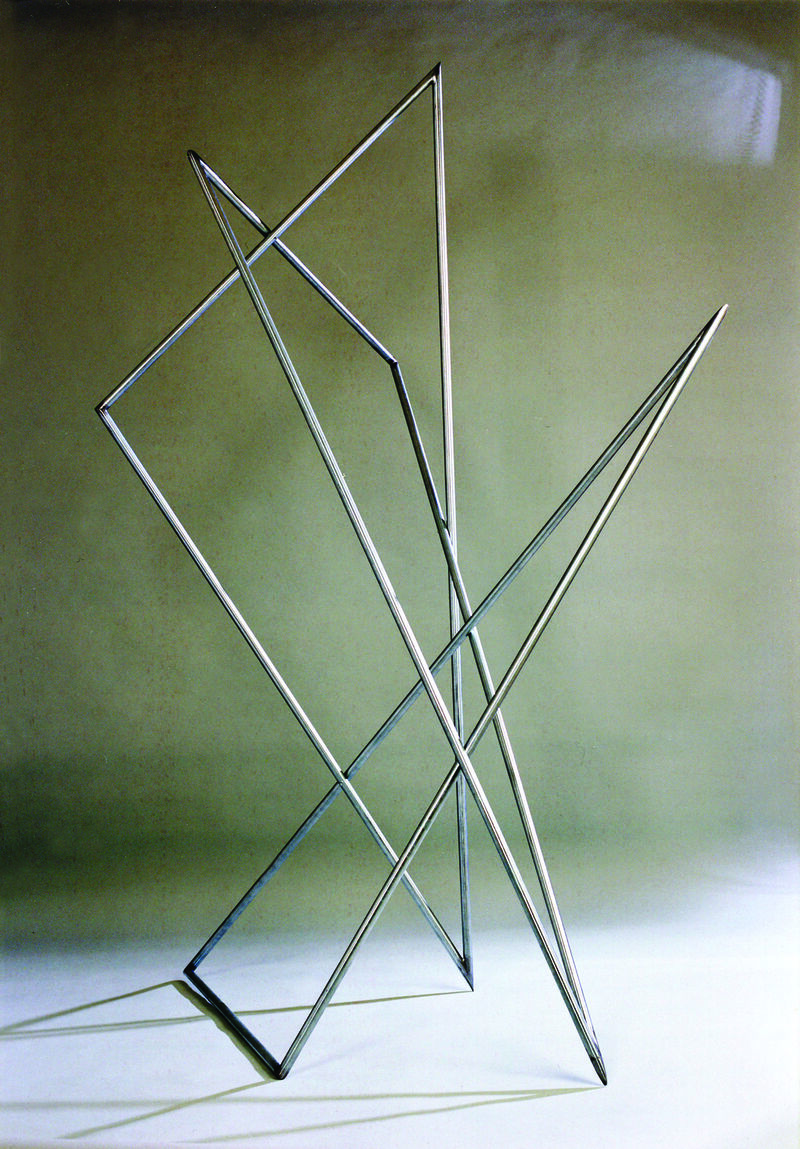
At the time of the exhibition, the artist's sculptural work was undergoing a transformation: from steel surfaces in primary colors with sharp angles, as in Balance (1988), to airy, fragile-looking stainless steel structures such as Trinity (1989), which thematizes the close interaction of past, present and future. The line and its intersections create transparent spatial constructs, which can be found in her paintings as a two-dimensional variant.
The line also remains the dominant element in subsequent works in which planar elements are integrated: in New Life (1995), the surface is oriented towards the form given by the lines. After her solo exhibition in Drachten, Groenhof also carried out public commissions such as Turfsnijder (Peat Cutter) (1991). The entire composition has a triangular structure and emphasizes the airiness and linearity by radically reducing the flat body of the figure to flat prisms.
Groenhof skillfully moves in numerous variations on the border between abstraction and figuration, in a dynamic expression with a high recognition value – despite the deliberate concentration on simple basic forms and primary colors. Her works of art convey deeper messages and questions about social problems and the complexity of human existence. The simplicity of the formal language encourages reflection in a unique way. »I aim to bring geometric forms to life and offer inspiration through careful attention to spatial organization. For me, art is not only meant to be aesthetically pleasing but also to ask questions, provide new perspectives, and transform our perception of the world«, says Groenhof.
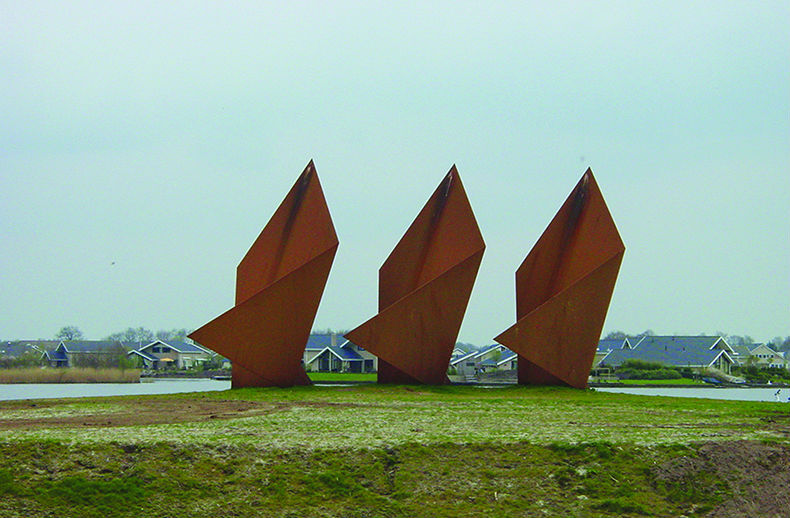
The expressive power of Groenhof's work results in further large-format commissioned works such as De Wachters (The Guards) (2000) and De Grins fan Greide en Wetter (The Border Between Meadow and Water) (2002). In addition to the use of other materials such as Corten steel in the former, they are characterized by a site-specific character that will play an increasingly important role in the artist's future oeuvre. The linearity decreases in favor of prismatic surfaces. In Wall Relief (2004), for example, steel surfaces in primary colors return – this time in combination with the reflective stainless steel that once replaced them. This combination, alternatively with black steel surfaces, has defined Groenhof's sculptural work ever since. It also finds a parallel expression in her paintings. Here, the forms are positioned primarily on a white background, which emphasizes the depth effect and the relationship to sculpture.
Groenhof's design objects, such as her garden furniture, also have a close connection to this. They are determined by colored surfaces with sharp angles and combine this in part with the lines of stainless steel rods. The objects are also handcrafted by the artist herself. Like a sculpture, they offer aesthetic and contemplative added value, but also invite use and stand in a close relationship to their surroundings.
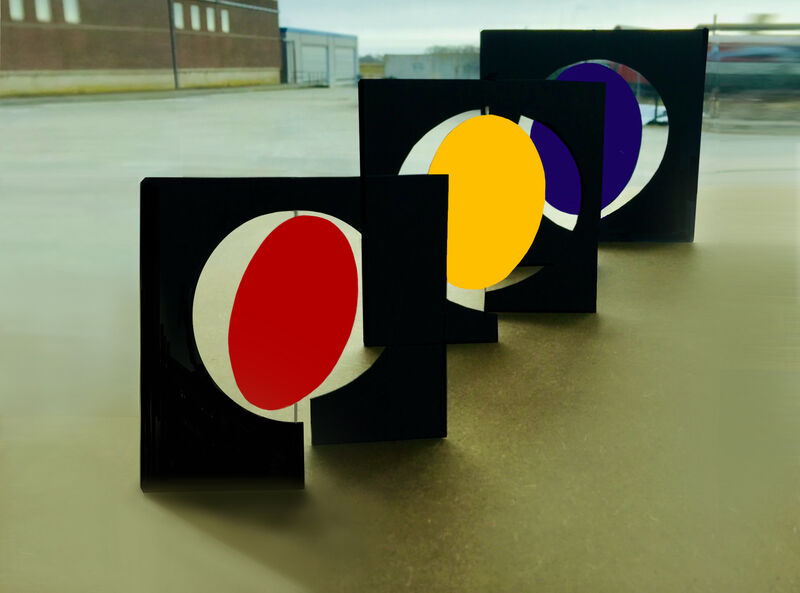
Other recent works, such as the land art project Ode aan M.C. Escher op 't Bildt (2018) or the sculpture Colors of the Wind (2024), expand the artist's existing formal language by explicitly dealing with nature, in particular the northern Dutch landscape. As one of seven artists, Groenhof designed a flat field of grain with her characteristic forms in the Ode aan Escher. Colors of the Wind is equipped with moving surfaces in red, yellow and blue. They are aligned by the wind, so that the artwork not only relates to its environment, but is actively shaped by it.
With the lightness of line and the depth of form, Ria Groenhof has established herself as a versatile artist over four decades. Her works develop between the poles of reduction and ambiguity, structure and openness. Whether as monumental sculptures in public spaces, as paintings on canvas or as designed landscapes: Groenhof's work remains in motion.
More detailed information about Ria Groenhof's work can be found on her artist page.
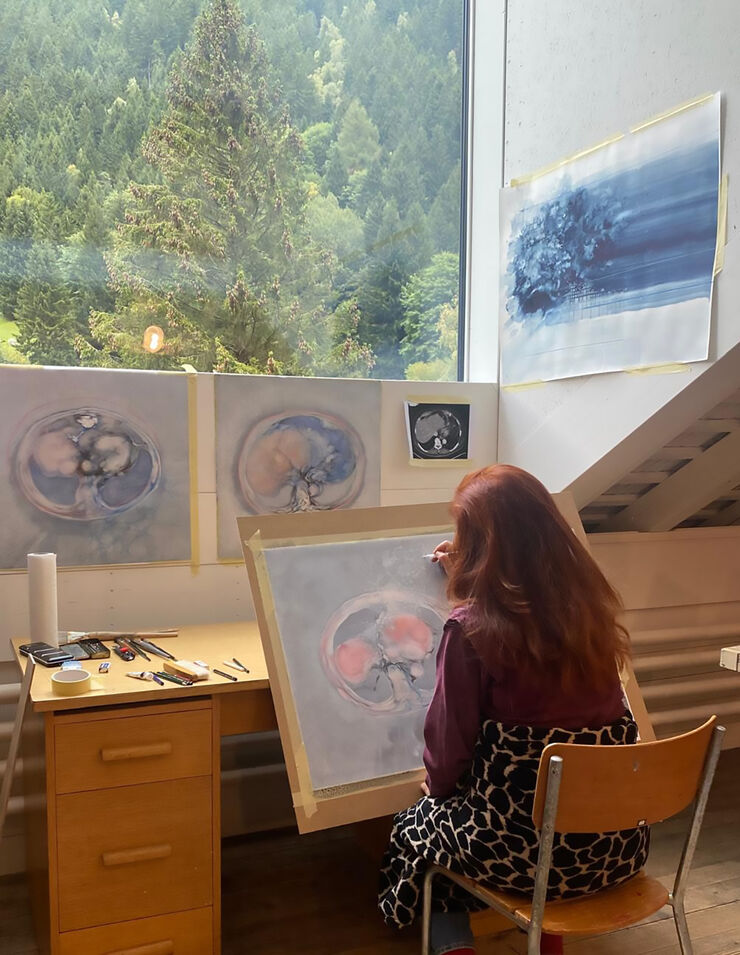
In September 2025, artist Christiane Fleissner took part in a working residency at the Kunstdepot Göschenen foundation in Switzerland for the second time. Art.Salon presents her experiences, her new works, and her other current projects.
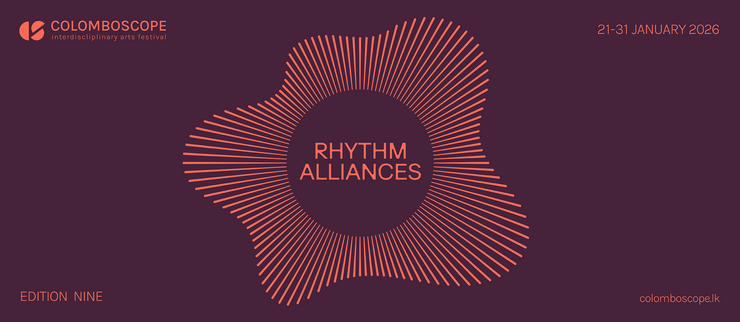
From January 21 to 31, Sri Lanka will host the ninth edition of Colomboscope, an experimental, interdisciplinary art festival entitled Rhythm Alliances. Over 50 artists, collectives, musicians, choreographers, filmmakers, and cultural organizers will present their projects at various freely accessible locations throughout the city of Colombo.
Pieter Bruegel the Elder is one of the most famous painters of his time, but his contemporaries primarily valued his idiosyncratic drawings, which served as models for prints. In the exhibition Bruegel Printed, the Städel Museum focuses on this aspect of his work. The exhibition runs through September 20 in Frankfurt am Main.
Around 1500, woodcut and copperplate engraving developed into distinct art forms: Drawing on works from its own collection, the Cleveland Museum of Art presents the exhibition The Renaissance Engraver at Work. The exhibition runs through November 1 and also features extremely rare prints.