Provided by Elitza Nanova.
The »Jacques Duthoo Award« of the Duthoo Group


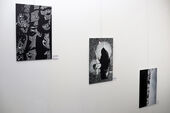
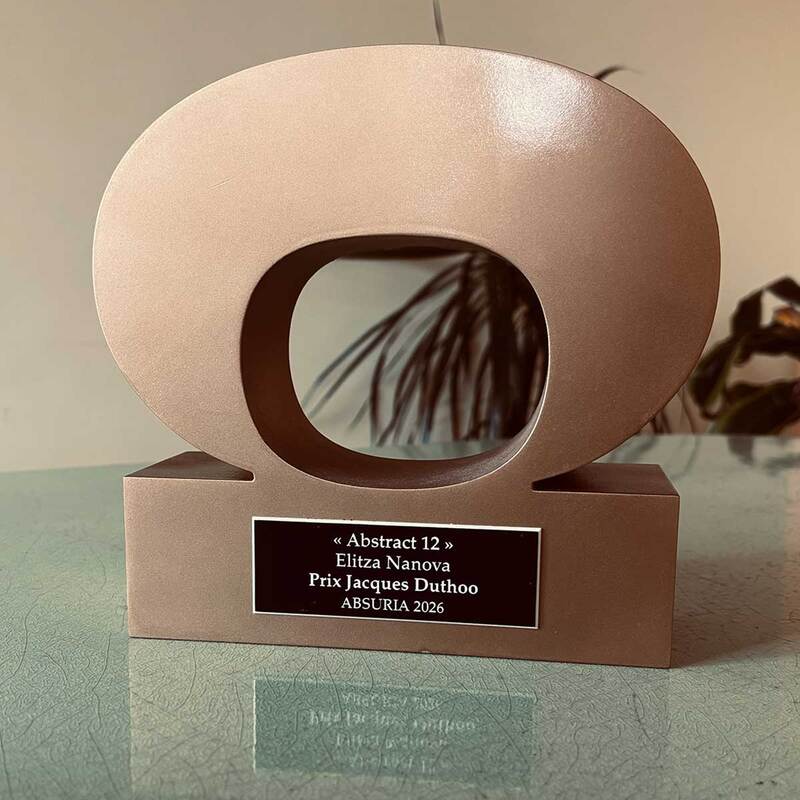
The first ABSURIA: The International Festival of Abstract and Surrealist Photography in Tours recently opened, with Elitza Nanova—a participant in the Art.Salon artist program—taking part. She was awarded a special prize at the festival for her work Abstract 12. ABSURIA runs through September 30.
Outstanding abstract and surrealist photographs are currently on display at several locations in the historic center of Tours: The first ABSURIA: The International Festival of Abstract and Surrealist Photography in Tours is taking place in the famous French city through September 30. The festival is aimed at amateur and professional photographers from around the world, whose works are given a major platform here. Several awards were presented at the start of the festival on June 2.
Among the participating artists is Elitza Nanova from the Art.Salon artist program. For her work Abstract 12, she was awarded one of the festival’s special prizes, the Jacques Duthoo Prize, named after the Tours-born abstract painter Jacques Duthoo (1910–1960). In addition to the trophy, the artist received an original work by the painter, and an exhibition will be dedicated to her in Tours.
As part of the nomination process, Robin Duthoo, a great-nephew of Jacques Duthoo, conducted a video interview with Elitza Nanova:
Elitza, French photography enthusiasts would like to get to know you better. Could you tell us a little about yourself?
First of all, thank you very much! It is a great honor for me to receive this award. I feel a deep connection to the artistic work of Jacques Duthoo.
I was born in Bulgaria but have lived in Berlin for over 40 years. There I studied art history and cultural studies. Afterwards, I worked, and still work, as a graphic designer. Photography has been a part of my life since my youth. A few years ago, I began to focus more intensively on artistic photography. I work primarily in three areas: dance and movement photography, abstract photography/structures, and digital photo collages.
Among your various works, what role does abstraction play in your body of work?
Abstraction plays a major role in my photography. Using a documentary medium like photography, I seek to create fictions, to transpose the everyday into artistic worlds, and to transform the well-known into the unknown.
In my abstract works, I look for things, media, and phenomena that distort and stylize reality – such as water, fog, glass, reflections, or the interplay of light and shadow.
In my dance photography, I work with photographic techniques that create abstraction, such as long exposures and multiple exposures, to create painterly images that preserve movement and its complexity.
In my digital collages, which I create in Photoshop, I combine both topics– structures and dance–to form surreal worlds. They connect according to their own logic.
What is your stance on AI?
AI makes many things easier in everyday life and at work, but it seems unsuitable for art. AI-generated images are either too perfect or too imperfect for human perception. But far more importantly, there's a lack of emotion. A traditional work of art contains the artist's entire personality in coded form, and the viewer senses that. It's like a spark that jumps across. I've experienced that many times and that's what I miss in AI art. And you see–to create new worlds you need only water.
What trends do you observe in the evolution of the photography market, and more specifically in the market for abstract photography?
Unfortunately, I am not very familiar with this area because the art and photography market has become very confusing due to the interplay of social media, online marketing, NFTs and AI.
For me personally, it's not easy to find suitable galleries for physical exhibitions because my photography falls somewhere in between: the classic photography galleries say, »That's not photography, more like painting«, while the conventional galleries say, »That's not painting, but photography.« That's why I called my last exhibition in Plovdiv Painterly Photography.
I'm very happy to be part of Absuria because the festival's thematic focus perfectly matches my art, and I find such an exhibition and discussion forum very important for the development of abstract and surreal photography.
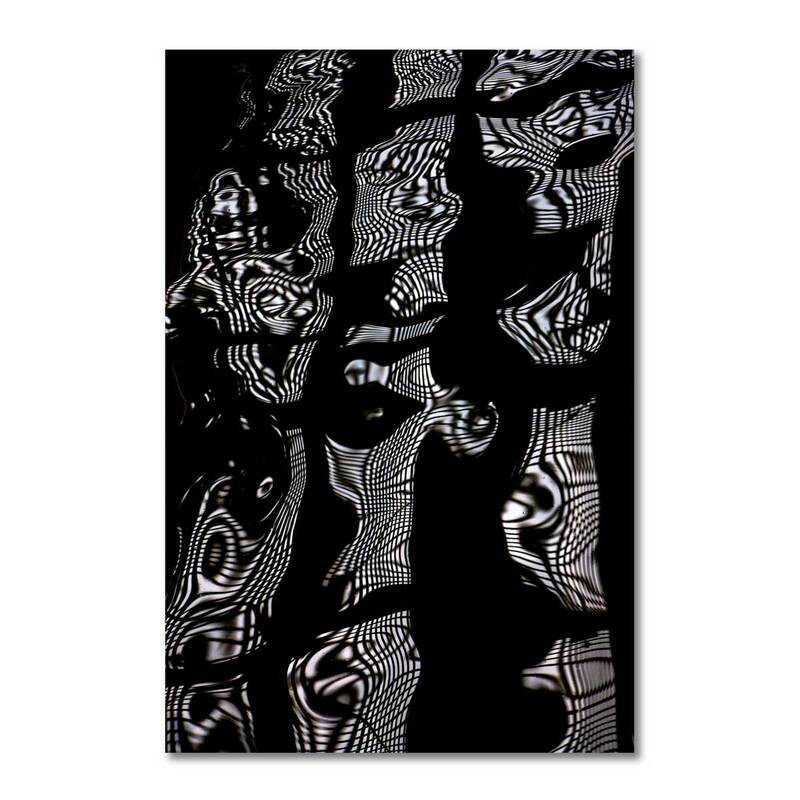
What is the significance of the award-winning photo Abstract 12 in your body of work?
Abstract 12 belongs to a larger series, Water Abstractions, created in 2025, which captures reflections on the Spree River in Berlin. It's actually a metal jetty, but the water transforms it into a beautiful pattern.
In this series, by zooming and selecting specific details, I removed the objects from their natural context and meaning. Houses, bridges, boats, cranes, posters, and traffic signs are transformed into structures, lines, shapes, and colors. They open up new spaces for association and experience, while retaining the pulse and coded charm of the metropolis.
What are your artistic projects?
A large exhibition in Plovdiv with more than 30 images has just ended. That´s why I couldn´t come personally to the nomination.
This autumn, I have an exhibition in Berlin with my fellow artist Corinna Rosteck, with whom I share the themes of water, motion, and femininity.
After my intense engagement with water, I'm in a creative crisis. It feels like losing a big love. Now I'm preoccupied with glass and broken mirrors, which create geometric and sharp forms. Perhaps an intriguing contrast to the soft, organic forms of water and a subject of a new exhibition?
In her first exhibition in Bulgaria, Elitza Nanova presents unique abstract photography and digital collages. Her artistic practice focuses particularly on the structures of water and its dynamics. Painterly Photography runs through May 30 at the Atizay Gallery in Plovdiv.
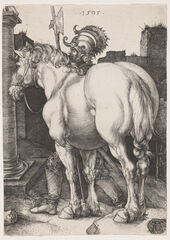
Around 1500, woodcut and copperplate engraving developed into distinct art forms: Drawing on works from its own collection, the Cleveland Museum of Art presents the exhibition The Renaissance Engraver at Work. The exhibition runs through November 1 and also features extremely rare prints.