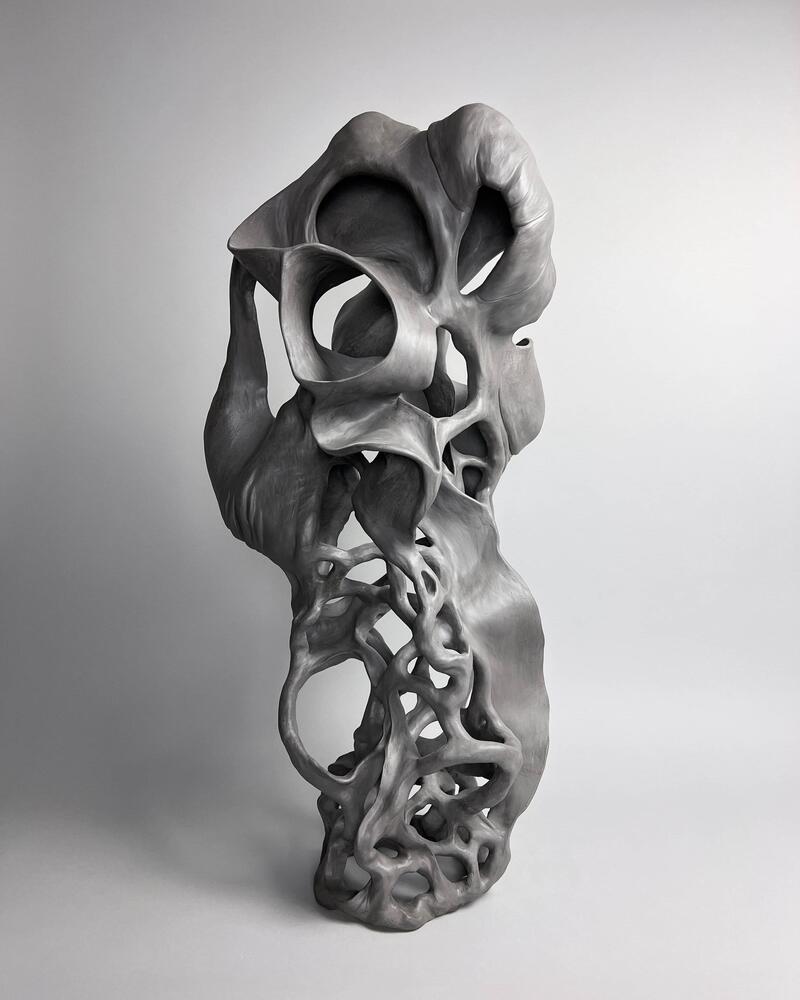
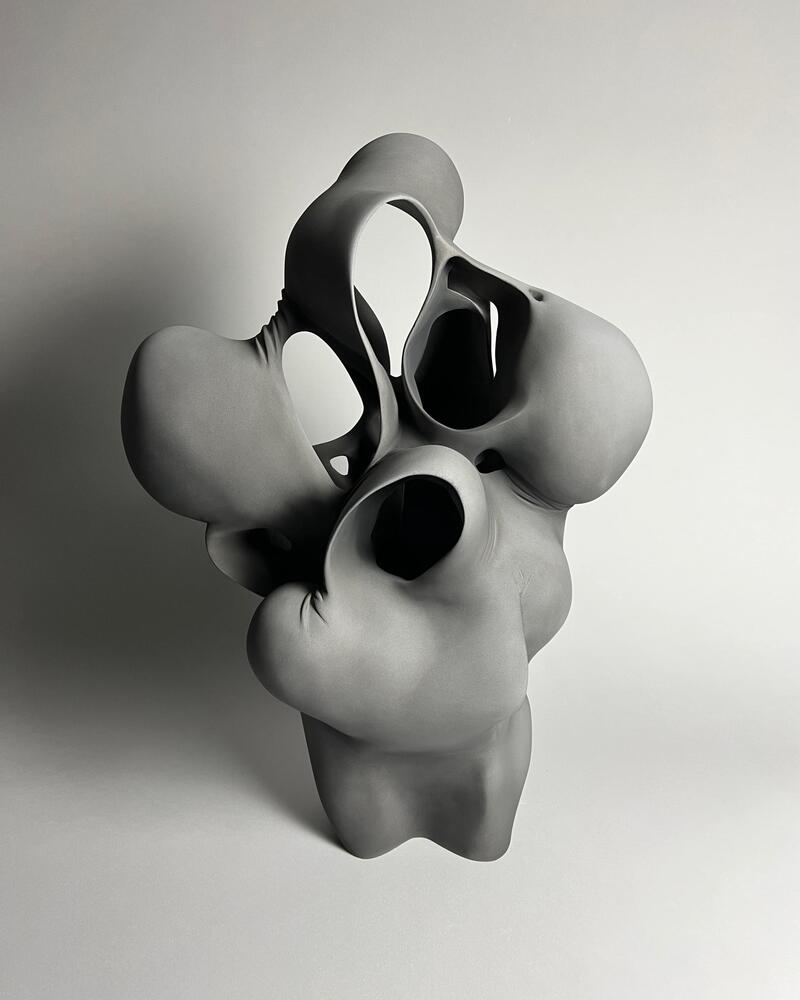
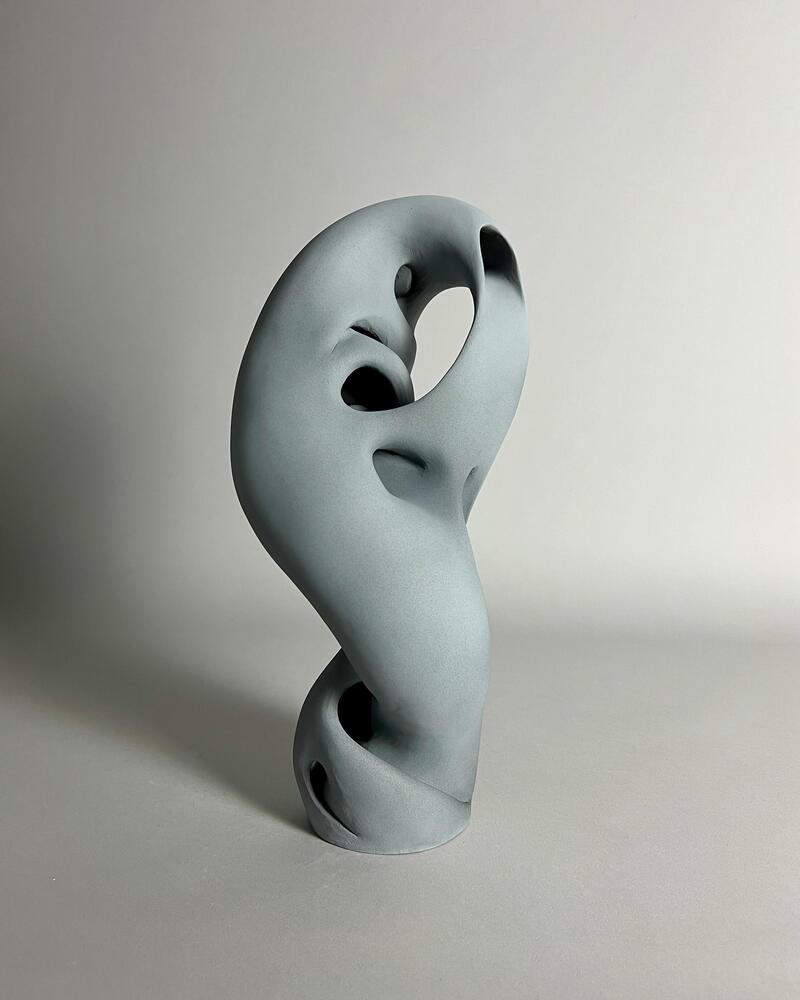
Juliette Mangenot: One Life (2021)


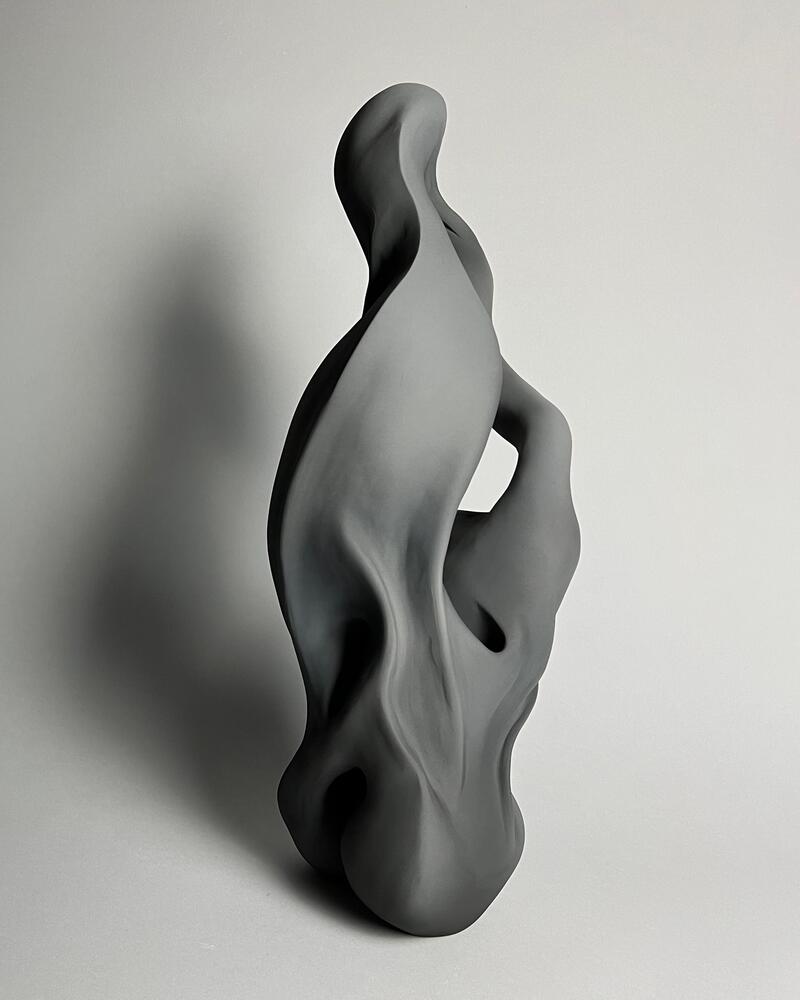
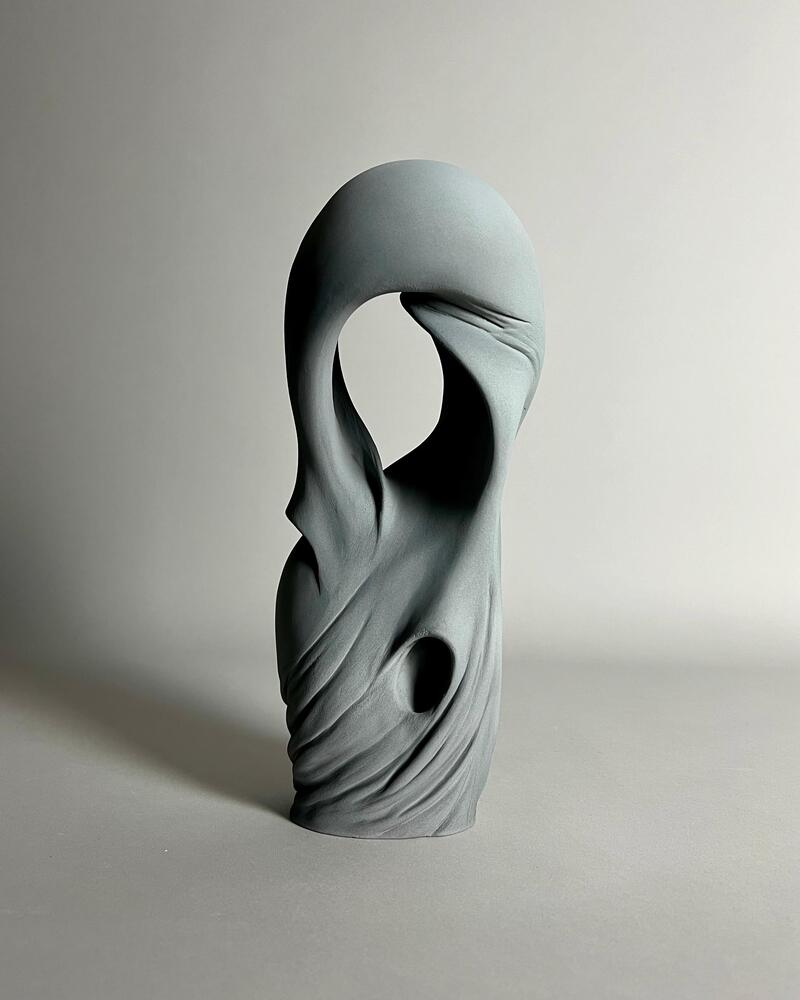
Juliette Mangenot creates sculptures that reflect human relationships. They seem to dance between intimacy and distance, trust and fear of loss. Beautifully shaped memento mori of human connections to each other and to the rest of the world.
Juliette Mangenot's sculptures are abstract and yet they reveal a profound reality. Their organic forms extend upwards and suggest associations with human bodies. And that is precisely how they are to be read: they show the essence of the human being, which for Mangenot arises from the connection between individuals. She views this connection as existential and yet full of contradictions. Closeness brings a sense of security as well as the fear of being abandoned. Relationships always carry the risk of separation – not as inevitable as life leading to death, but still an intrinsic thorn. In her sculptures, the artist questions emotional dependencies and expresses the intertwined paths of human connections. Beauty and harmony, change and departure are translated into a directly accessible formal language, as are the struggles between closeness and distance or the fragmentary network of relationships that make up a life's journey.
Although the Paris-based artist learnt the basics of sculpting in the studio of Hans Marks when she was just a teenager, it took another 25 years before she saw herself as a sculptor. She initially studied graphic design at the Penninghen Art School for Art Direction and Interior Design in Paris. Afterwards, she worked as a graphic designer for 20 years, but not without also pursuing freelance artistic work on the side. For a long time, however, her main focus was on engraving, which she came across during an Erasmus exchange in Norway while she was still a student. In her search for ways to incorporate another dimension and spatial depth into her artistic work, she explored metalwork, eventually training as a jewellery designer, and was particularly fascinated by the freedom of expression offered by working with wax. Now, the only limit she felt was the small scale of jewellery design, so she discovered sculpture as the perfect medium for her creative expression.
More about the artist: Juliette Mangenot's artist page
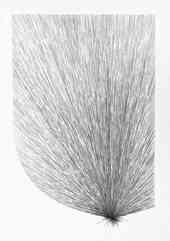
In a free dance with hidden rules, a wildly organised swarm of dots and lines forms complex structures between order and freedom, choreographed by Agata Kycia in a suspenseful performance of inner beauty and coherence.
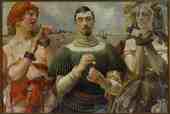
As part of the InterNationalgalerie series, the Alte Nationalgalerie invites other institutions to exhibit in its own spaces. Kicking off the series on June 18 is the National Museum in Warsaw with the exhibition Inventing Myths.