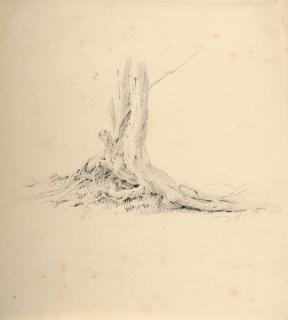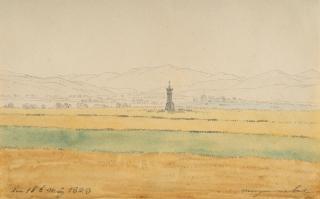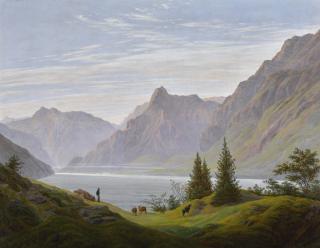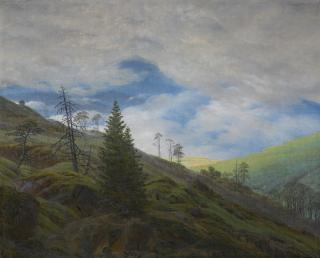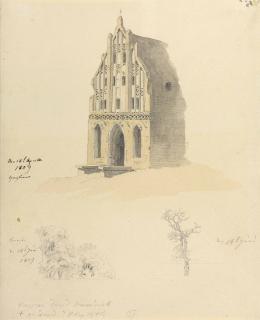


Today, the name Caspar David Friedrich is widely known, his paintings universally recognized. Even during his lifetime, Friedrich, born in 1774, enjoyed an exceptional reputation as a landscape painter. He lived a secluded life, often undertook long hikes, and turned his sketches of landscapes into coveted oil paintings. What was considered radical was the charging of his landscape paintings with religious meaning, inspired by the power of nature rather than the church: a novelty in art that repeatedly provoked heated discussions among art critics around 1800.
Artistic taste changed quite rapidly, so that Friedrich had little success in the last 20 years of his life. He stuck to his style and died in 1840, by which time he was almost forgotten. His dream of a united Germany, which is also reflected in his paintings, was not fulfilled until long after Friedrich's death − as was his rediscovery in 1906 on the occasion of a Berlin exhibition on German artists of the past. Friedrich's paintings were perceived as surprisingly modern, and the people depicted in nature were understood as symbols of isolation and loneliness in the age of industrialization. Even today, Friedrich's works are accessible and popular. The documentary Caspar David Friedrich − Wanderer between the Worlds (2020) conveys Friedrich's reception and the latest research findings on his life and work.