© The Trustees of the British Museum
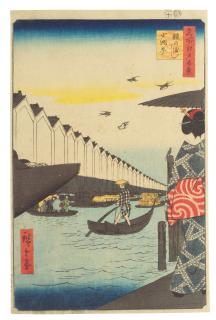
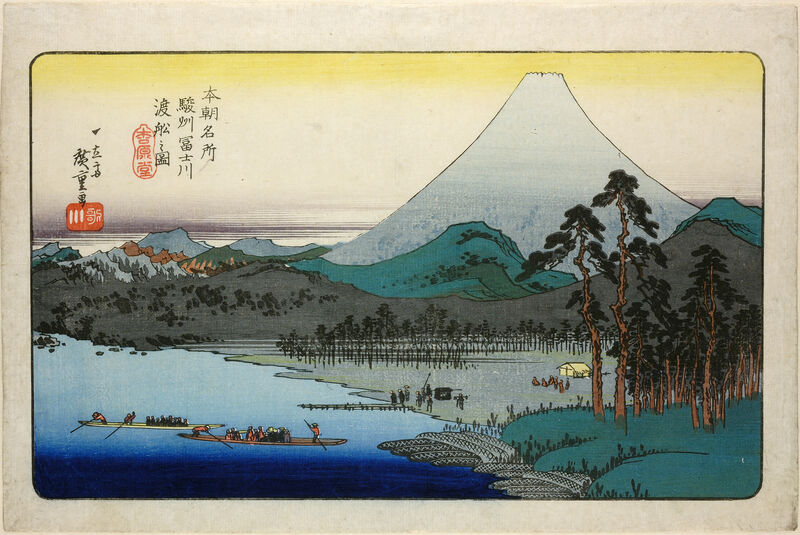
Ferry on the Fuji River, Suruga Province from Famous Places in Japan, c. 1832 By Utagawa Hiroshige (1797—1858) Colour-woodblock print


With Hiroshige: artist of the open road, the British Museum is paying tribute to one of Japan's best-known artists: Utagawa Hiroshige was one of the most influential ukiyo-e artists of the 19th century. The exhibition opens in London on May 1st.
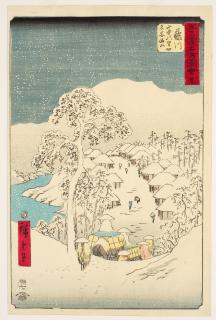
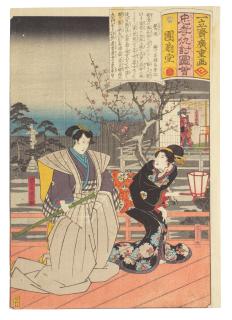
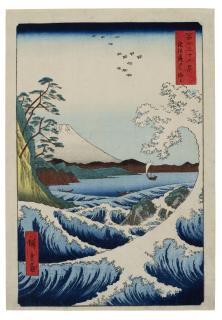
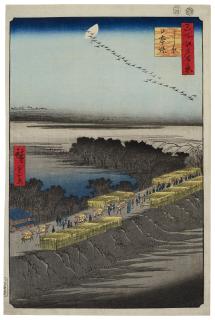
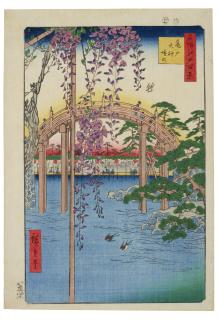
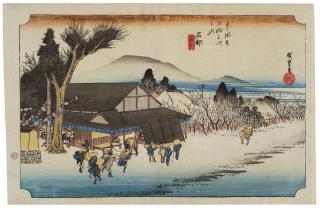
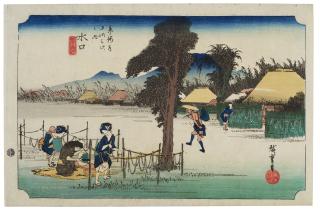
He is regarded as the last great master of ukiyo-e: Utagawa Hiroshige (1797-1858) was a style-defining artist in the last decades of the Edo period (1615-1868), before Japan opened up politically and culturally to other countries and the country underwent radical change. Hints of this change can be found even before 1868, including in Hiroshige's works. In his landscape paintings and depictions of urban life, the ukiyo-e (»pictures of the floating world«), the artist combined tradition with innovative compositional strategies. His pictures were already famous in Japan during his lifetime. Woodblock prints were relatively inexpensive and could therefore be purchased by a wide audience, similar to artistically designed fans, of which Hiroshige created several hundred. Hiroshige's exceptional craftsmanship and compositional skills also made him internationally renowned, with many Impressionists and artists such as Vincent van Gogh and later Julian Opie being influenced by the Japanese artist's work. The British Museum is presenting Hiroshige in a comprehensive exhibition from May 1st. The occasion is a donation by Alan Medaugh to the organization American Friends of the British Museum. The donation comprises 35 works for which the museum will be responsible after the exhibition. A further 82 exhibits are on loan, most of which also come from Medaugh's collection. Hiroshige: artist of the open road runs until September 7 in London.
Utagawa Hiroshige's birth name was Andō Tokutarō. He later chose the stage name Hiroshige, which he was allowed to use with official permission in conjunction with his school name Utagawa. As a young artist, Hiroshige was not considered outstanding and his technical skills were rated as average at best. It was not until around 1830 that his skills improved, which he practiced to the point of mastery in the following years. In combination with his unusual compositions, in which Hiroshige mixed observation with fiction, he appealed to contemporary tastes. Nevertheless, he was only able to make a modest living from the sale of his low-priced works. The One Hundred Famous Views of Edo series, created in the last two years before his death, is considered to be his artistic legacy and the pinnacle of his creative output. It is estimated that Hiroshige produced a total of 4,500 print designs and illustrations for around 120 books.
Some of the exhibits contain extremely light-sensitive colors. For this reason, the exhibition will be closed from June 30 to July 4 in order to replace some works with other similar works.
He was one of the most famous Dutch photographers of the 20th century: Ed van der Elsken captured cultural upheavals as a street and travel photographer. The exhibition Ed van der Elsken. Up Close is on view at the Rijksmuseum Amsterdam through September 13.
Art for the harmonious coexistence of the global population: At the Haus der Kunst in Munich, Argentine artist Tomás Saraceno presents visions for new forms of living together. The exhibition Tomás Saraceno. Ancestral Futures opens on July 17.