© Marc-Oliver Schulz
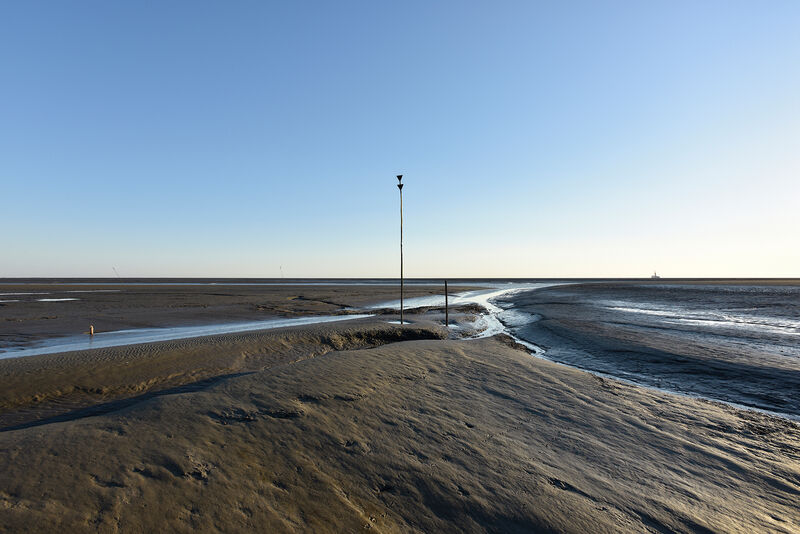
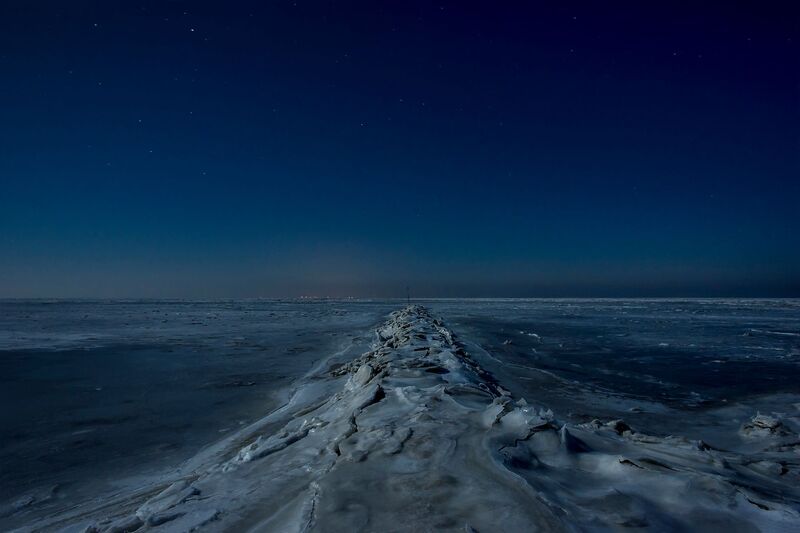
Marc-Oliver Schulz, Kardinalzeichen Süd und trockenfallender Priel, 01.07.2015


The countless faces of the Wadden Sea continue to fascinate Hamburg-based photographer Marc-Oliver Schulz. His abstract landscapes draw attention to the act of seeing itself. The pictures are now being exhibited for the first time in Berlin: Marc-Oliver Schulz – Wasserland (Water Land) can be seen at the Alfred Ehrhardt Foundation from September 13.
The Wadden Sea is a unique landscape. Subject to the constant rhythm of the tides, it is constantly reshaping itself, yet always retains its special character. The Wadden Sea represents the in-between like hardly anything else: it is neither dry nor flooded land, always changing, but never in constant motion. Between 2009 and 2017, Hamburg-based photographer Marc-Oliver Schulz took his photographs of the Wadden Sea on the North Sea coast between Cuxhaven and Büsum, showing it in a different light. The moments of meditative silence last forever in his pictures, the typical associations of movement and change are omitted. It is not the structures, the play of light on the water's surface, the mood of the landscape or the description of a place that determine his work, but the act of seeing itself. From September 13 to December 21, Schulz's works will be on display for the first time in Berlin: The exhibition Marc-Oliver Schulz – Wasserland (Water Land) at the Alfred Ehrhardt Foundation features 35 photographs. The artist will be present at the exhibition opening on September 12 at 7 p.m.
Photographer and documentary filmmaker Alfred Ehrhardt (1901–1984) also explored the Wadden Sea between the islands of Scharhörn and Neuwerk off Cuxhaven. For Ehrhardt, the mudflats were an expression of the forces of nature, and in the 1930s he focused primarily on capturing the structures in the sand and the moods. There are no traces of human civilization in his pictures, in contrast to those of Marc-Oliver Schulz. He photographs from stone groynes, which are often visible at the bottom of the picture, and also captures distant lights from coastal towns and villages. The Wadden Sea, shaped by humans, becomes a symbol of the conflict-ridden power structure between humans and nature.
As part of the InterNationalgalerie series, the Alte Nationalgalerie invites other institutions to exhibit in its own spaces. Kicking off the series on June 18 is the National Museum in Warsaw with the exhibition Inventing Myths.
Through June 27, Elvira Flamm is showcasing three works from her series Ikonen ohne Namen (Icons without Names) in the Made in Berlin Art Award 2026 exhibition. She was selected as one of 20 artists for the show at the BBA Gallery.