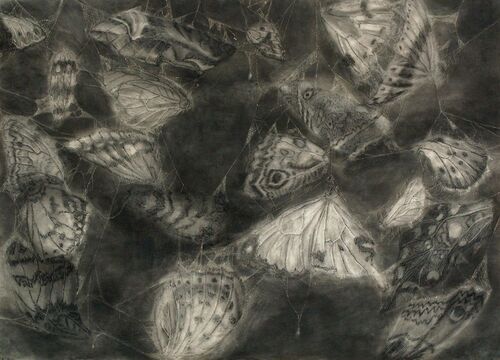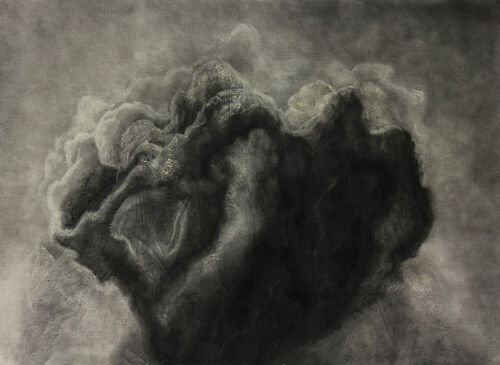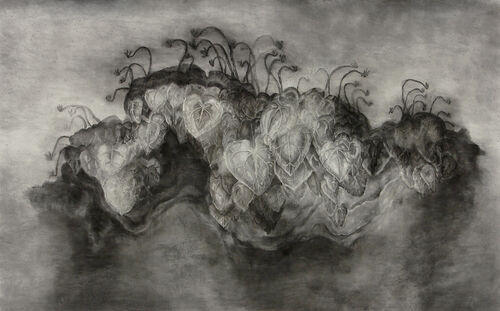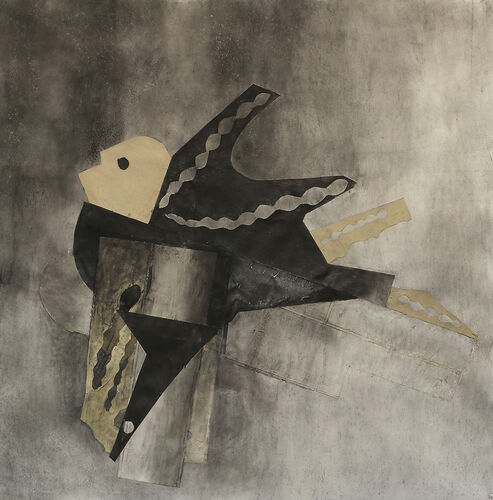

Foto: © Roman März (abgebildete Werke: Ludwig Kasper, Felix Nussbaum, Karl Hofer, © VG Bild-Kunst, Bonn 2023)
Ausstellungsansicht „Kunst in Berlin 1880—1980“


From the German Empire to a divided city: Berlin's history was eventful in the 20th century. In the permanent exhibition Art in Berlin 1880 – 1980, the Berlinische Galerie presents in detail how the changes affected art. Paintings, prints and photographs, some of which have never been exhibited before, are also on display.
With a large permanent exhibition covering over 1,000 m², the Berlinische Galerie offers detailed insights into 100 eventful years in the city of Berlin: Art in Berlin 1880 – 1980 shows how closely art and history are interwoven. Visitors can expect to see around 250 exhibits, including some paintings, prints and photographs that have never been on public display before.
The history of Berlin from the end of the 19th century to a few years before the fall of the Berlin Wall is traced in 17 chapters: In 1871, Berlin became the capital of the newly founded German Empire. In the face of advancing industrial modernization, the Emperor and the conservative bourgeoisie promoted traditional art, which valued the history painting as the highest genre and often served to idealize its patrons. Some artists took a stand against academic art and adopted Impressionist and Realist trends, which ultimately led to the Berlin Secession in 1898. Now famous painters such as Lovis Corinth, Max Liebermann and Edvard Munch presented their innovative works in private galleries. This period is regarded as the dawn of modernism in Berlin, which was dominated by Expressionism from 1910 onwards.
After the horrors of the First World War, radical rethinking, as propagated by the Dada movement, was also popular in the Weimar Republic. Hannah Höch, Raoul Hausmann, George Grosz and Johannes Baader were some of the main representatives of this style. Every movement provokes counter-movements: New Objectivity also shaped the 1920s in Berlin, as exhibited works by Felix Nussbaum and Conrad Felixmüller show. The subsequent period of National Socialism put an end to the development of a modern culture. The radical intervention of the regime changed the art scene from the ground up, numerous artists emigrated and quite a few, including Nussbaum, were murdered.

After the end of the Second World War, mourning and death were the predominant themes of artworks, but hope for a new beginning could also be found. In 1945, the Rosen Gallery on Kurfürstendamm once again exhibited art that had been considered “degenerate” just a few months earlier. The post-war period sought new expression and abstraction set the tone, at least in West Germany. The divided city of Berlin experienced different developments in the FRG and GDR in a very confined space, with only a few points of contact. In the 1970s, an alternative art scene developed in East Berlin, which could also be shown in public over time due to relaxed cultural policies, and West Berlin, the isolated city, attracted artists who were keen to experiment and who placed photography in particular at the center of their work.
The exhibition also includes works by Otto Bartning, Georg Baselitz, Max Beckmann, Jacoba van Heemskerck, Oskar Kokoschka, Jeanne Mammen, Alexander Rodtschenko, Kurt Schwitters, Hans Uhlmann, Anton von Werner and Heinrich Zille.
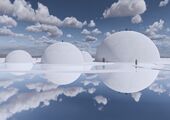
Art for the harmonious coexistence of the global population: At the Haus der Kunst in Munich, Argentine artist Tomás Saraceno presents visions for new forms of living together. The exhibition Tomás Saraceno. Ancestral Futures opens on July 17.
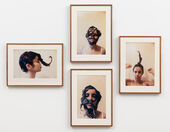
A unique body of work: Tate Modern is presenting the Cuban artist Ana Mendieta with over 150 works, including films, installations, and rarely seen paintings. The exhibition of the same name opens on July 15 in London.